Have you ever searched for a word that means almost the same as another word but could not find the right match? I have faced this while writing, and that is where similarly becomes useful. The word similarly means in a similar way, in the same manner, or to a comparable extent. It helps connect ideas, explain relationships, and show how two or more things share common features.
Understanding similarly, its meaning, synonyms, pronunciation, definition, and correct usage can make your writing and everyday communication clearer. Whether you are working on an English essay, writing a professional email, preparing a school assignment, or improving your English vocabulary, knowing how to use this word can help you express comparisons naturally. You can also learn when to use alternative expressions such as likewise, in the same way, equally, and in a similar manner.
In this guide, you will explore similarly in different sentences, its common uses, related expressions, and the differences between similar words. You will also find simple examples, practical explanations, and helpful tips to understand how the word works in everyday English. Keep reading to discover useful ways to use similarly correctly and confidently in your writing, conversations, and daily communication.
What Does “Similarly” Mean?
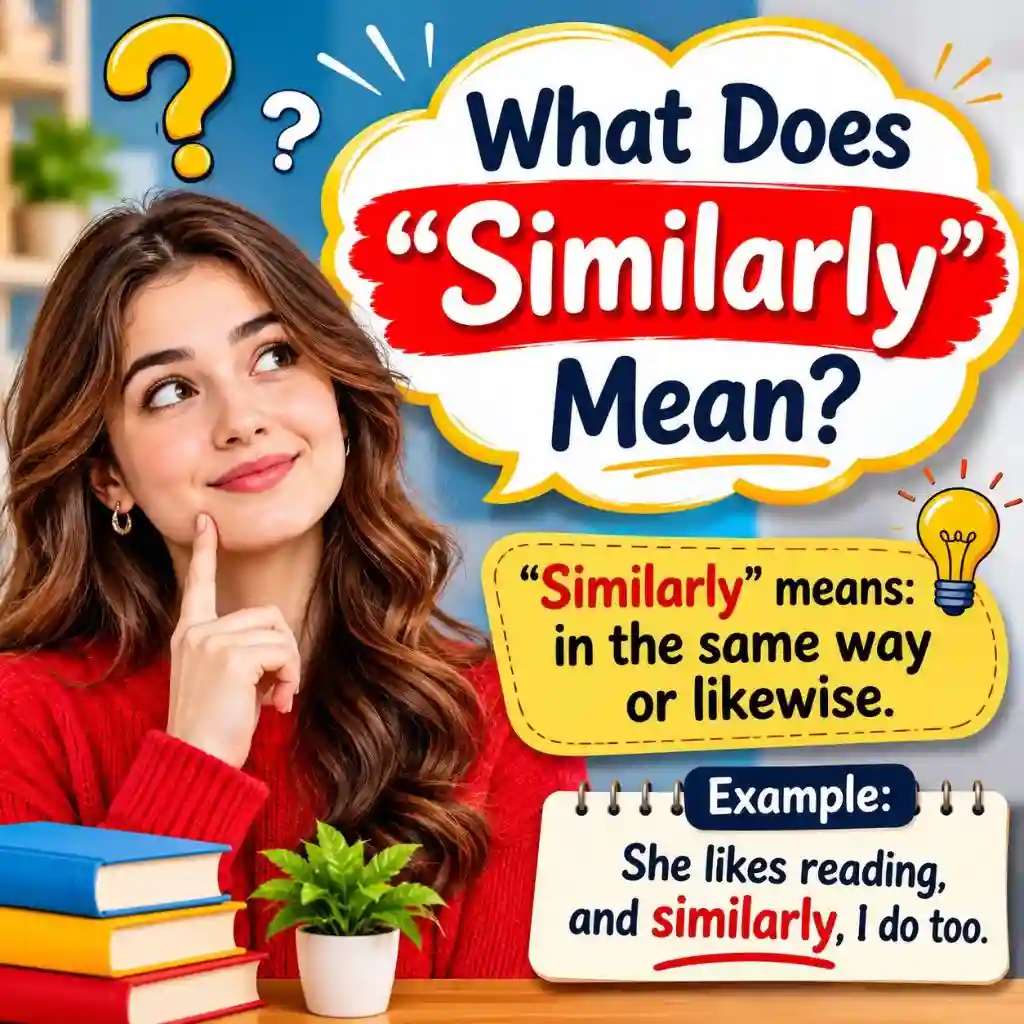
Similarly is an adverb that means in a similar way, in the same manner, or almost alike. It describes an action, situation, or idea that shares something in common with another. People use this word to connect two related thoughts and explain how things have similar qualities, behaviors, or results. It does not always mean that two things are exactly the same; it simply highlights a shared feature or comparable situation.
For example, if two students prepare for an exam using the same study method, you can say, “Both students studied similarly.” It shows that their study habits were alike, even if their schedules were different. In writing, similarly can also introduce another point that supports or relates to the previous statement.
The word is closely related to similar, similarity, likewise, equally, and in the same way. However, similarly is specifically an adverb, so it describes how something happens or connects one statement with another. Understanding its meaning helps you make clear comparisons, improve sentence structure, and express related ideas naturally.
Examples of “Similarly” in Different Contexts
The word similarly works in everyday conversations, academic writing, professional communication, and descriptive sentences. Its meaning stays connected to resemblance or a shared situation, but its role can change depending on the context. Here are practical examples that show how to use similarly in different situations.
- Everyday Conversation: “My brother enjoys reading novels. Similarly, I love reading books in my free time.” Both people share a similar interest in reading.
- Academic Writing: “Students need regular practice to improve their writing. Similarly, daily reading helps develop vocabulary.” The second sentence introduces another related learning activity.
- Professional Communication: “The marketing team completed its project on time. Similarly, the design team met its deadline.” Both teams achieved a comparable result.
- Education: “Sarah studies mathematics every evening. Similarly, her friend practices science problems after school.” Both students follow regular study routines.
- Business: “The company improved its customer service last year. Similarly, it introduced faster delivery options this year.” Both actions show efforts to improve customer experience.
- Daily Habits: “I drink water after waking up. Similarly, my sister follows the same morning habit.” The two people have a shared routine.
- Technology: “The first application stores user information securely. Similarly, the second application uses data protection features.” Both applications offer a comparable feature.
- Health and Fitness: “Walking helps people stay active. Similarly, cycling provides a simple way to exercise.” Both activities support physical activity.
- Travel: “We enjoyed visiting the mountains during summer. Similarly, the coastal trip gave us beautiful memories.” Both trips provided enjoyable experiences.
- Sentence Connection: “The first report highlights the importance of teamwork. Similarly, the second report explains how cooperation improves results.” The word connects two related points.
These examples show that similarly can describe shared actions, habits, qualities, and ideas. You can also place it at the beginning of a sentence, usually followed by a comma, when introducing a related statement.
Read More: 35+ Other Ways to Say “After Careful Consideration”
Benefits of Using “Similarly”
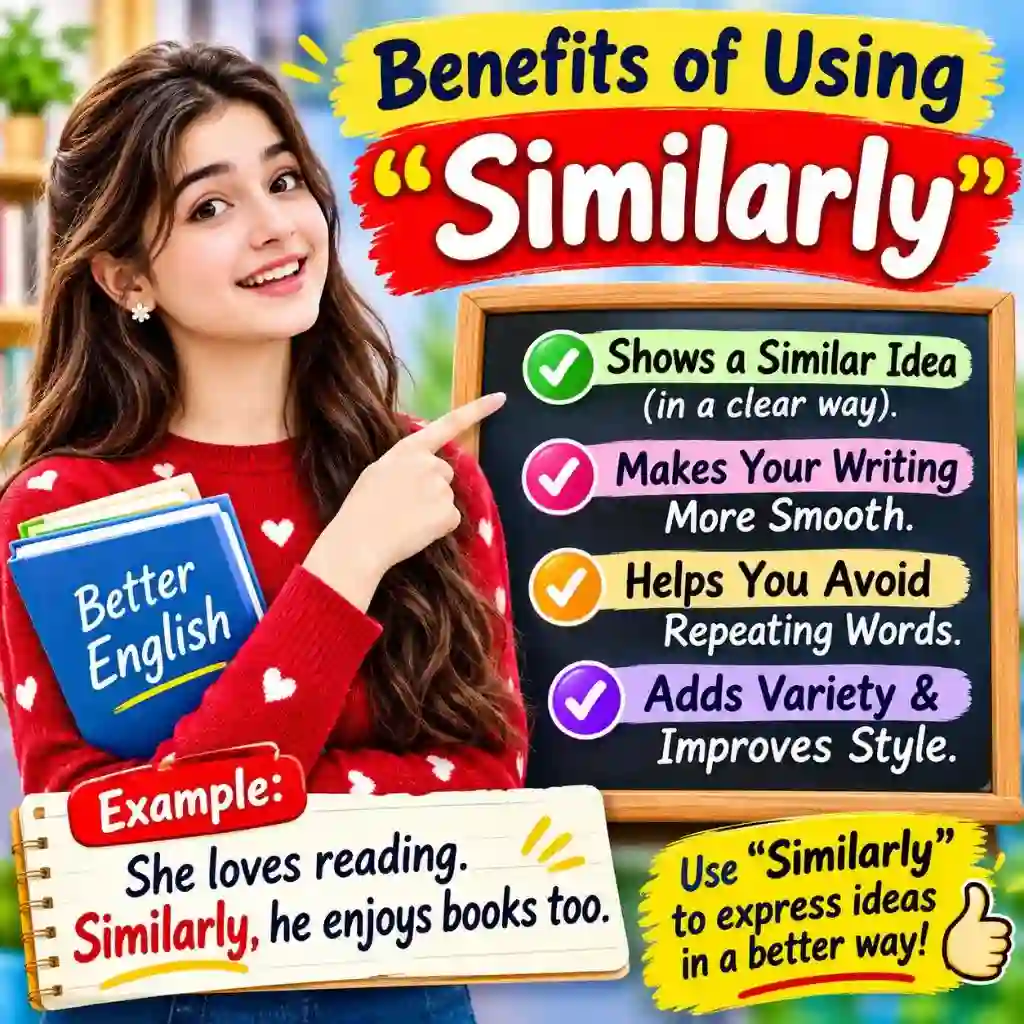
Using similarly can make your writing more organized and easier to understand. It helps readers recognize connections between different statements without repeating the same explanation. Whether you are writing an essay, preparing a report, or having a professional conversation, this word offers several practical benefits.
- Connects Related Ideas: Similarly creates a natural connection between two statements. It helps readers understand how one point relates to the previous information.
- Improves Sentence Flow: Instead of starting every sentence with the same words, you can use similarly to create smoother transitions between related thoughts.
- Makes Comparisons Clearer: It helps explain shared qualities, behaviors, methods, or results without suggesting that two things are completely identical.
- Strengthens Academic Writing: Students can use similarly to connect research findings, explain related arguments, and organize information in essays or assignments.
- Supports Professional Communication: In business emails and workplace reports, similarly helps introduce another relevant point in a clear and formal way.
- Reduces Repetition: It offers an alternative to repeatedly using phrases such as “in the same way” or “also” when making related statements.
- Expands Vocabulary: Learning similarly alongside words such as likewise, correspondingly, and comparably gives you more ways to express relationships between ideas.
Overall, similarly is a useful transition word that supports clear communication. However, it works best when the two statements genuinely share a connection. Using it between unrelated ideas can confuse readers instead of improving sentence flow.
When to Use “Similarly”
Use similarly when you want to explain that an action, situation, quality, or result resembles something already mentioned. It is especially helpful when comparing two related points or introducing another example that supports your previous statement. Choosing the right place for this word makes your sentences easier to follow.
Here are some common situations where similarly fits naturally:
- When Comparing Two Actions: Use similarly when two people perform an activity in nearly the same way. Example: “Both teachers explain difficult topics similarly.”
- When Connecting Two Ideas: Place similarly at the beginning of a sentence to introduce a related point. Example: “Exercise supports physical health. Similarly, proper sleep helps the body recover.”
- When Describing Shared Qualities: Use it when two objects, people, or situations have comparable features. Example: “The two houses are similarly designed.”
- When Writing Essays: Use similarly to connect related arguments or observations without repeating the complete explanation.
- When Preparing Reports: It can introduce another finding that follows the same pattern as the information discussed earlier.
- When Explaining Results: Use similarly when two activities or situations produce comparable outcomes. Example: “The first method reduced costs. Similarly, the second method improved efficiency.”
Sentence placement also matters. When similarly connects two complete sentences, it commonly appears at the beginning of the second sentence, followed by a comma. For example, “The first team finished its work early. Similarly, the second team completed its task ahead of schedule.”
You can also use it before an adjective or adverb, as in “The two rooms are similarly decorated.” Avoid confusing similarly with similar. For example, say “The two designs are similar,” not “The two designs are similarly.” The correct choice depends on whether you need an adjective or an adverb.
Is It Professional/Polite to Say “Similarly”?
Yes, similarly is a professional and polite word when used in the right context. It is commonly suitable for business emails, academic essays, workplace reports, presentations, and formal discussions. The word does not sound rude, informal, or disrespectful. Instead, it helps introduce a related statement and creates a logical connection between different points.
In professional writing, similarly can make your explanation more organized. For example, you might write, “The sales department completed its monthly targets. Similarly, the customer support team improved its response time.” This sentence presents two related achievements in a clear and respectful way. It is also useful in academic discussions when explaining similarities between research findings, arguments, or observations.
However, similarly is not always the best response in direct conversation. If someone shares an experience and you want to show that you feel the same way, a simple phrase such as “I feel the same way” or “Likewise” may sound more natural. Similarly works better when you are connecting complete ideas rather than simply responding to someone’s greeting or personal comment.
Professional examples:
- In an Email: “We have updated the project schedule. Similarly, we will revise the delivery timeline.”
- In a Meeting: “The first department reported positive results. Similarly, the second department achieved its monthly goals.”
- In an Academic Essay: “Regular reading improves vocabulary. Similarly, writing practice develops language skills.”
- In a Business Report: “The company increased its online sales. Similarly, its customer retention rate showed improvement.”
The key is to use similarly when a genuine comparison exists. It sounds professional when it connects relevant information, but it should not replace more natural expressions when a simple conversational response is enough.
Read More: 42+Ways to Say “My Mind is Made Up”(With Examples)
Alternative for “Similarly”
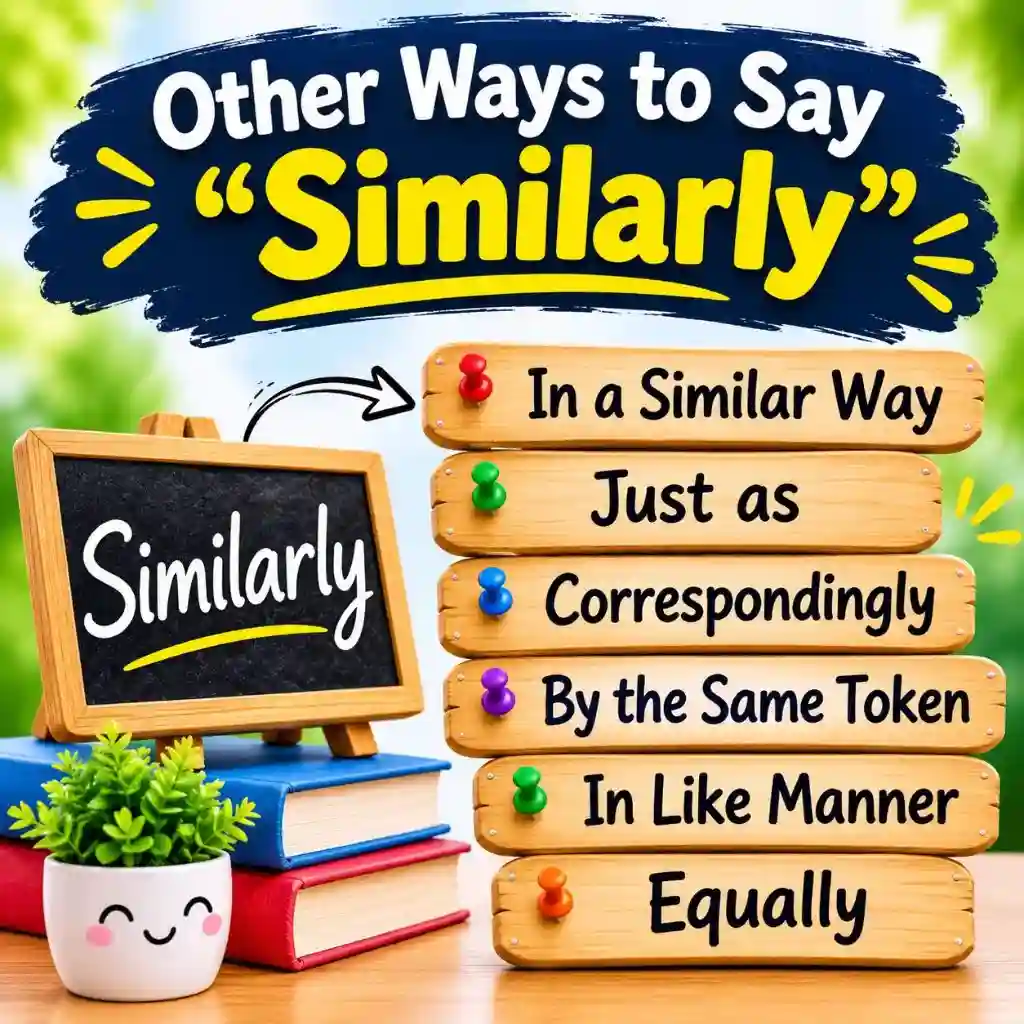
1. Likewise
Meaning/Definition:
Likewise means in the same way or similarly. It shows that another person, action, or situation shares a similar quality or experience.
Explanation:
People use likewise to connect related ideas, express agreement, or show that something applies to another situation. It works well in everyday and professional communication.
Example:
“Our team appreciates your hard work. Likewise, we value your support.”
Best Use:
- Professional emails and workplace communication.
- Expressing agreement in conversations.
Worst Use:
- When two statements have no meaningful connection.
- When a simple response sounds more natural.
Tone: Polite, professional, friendly.
2. In the Same Way
Meaning/Definition:
In the same way means using a similar method or following a comparable approach.
Explanation:
This phrase connects two actions, ideas, or situations that share a common method or quality. It helps readers understand how one point relates to another.
Example:
“Reading improves vocabulary. In the same way, writing helps develop language skills.”
Best Use:
- Academic essays and assignments.
- Explaining similar methods or actions.
Worst Use:
- When two actions follow completely different methods.
- When there is no clear comparison.
Tone: Clear, explanatory, neutral.
3. Equally
Meaning/Definition:
Equally means to the same degree, amount, or extent. It describes situations where two or more things have equal importance, value, or effect.
Explanation:
People use equally when comparing importance, performance, responsibilities, or treatment. Unlike similarly, it emphasizes an equal level rather than just a resemblance.
Example:
“Both employees contributed equally to the success of the project.”
Best Use:
- Workplace performance comparisons.
- Discussions about fairness and equal treatment.
Worst Use:
- When two things are similar but not equal.
- When their importance or results differ.
Tone: Balanced, formal, objective.
4. In Like Manner
Meaning/Definition:
In like manner means in a similar way or following a comparable method.
Explanation:
This expression highlights similarities between actions, procedures, or behaviors. It is more formal than everyday alternatives such as “in the same way.”
Example:
“The first department reviews every application carefully. In like manner, the second department checks all submitted documents.”
Best Use:
- Formal documents and reports.
- Academic explanations and comparisons.
Worst Use:
- Casual conversations.
- Simple messages where shorter wording works better.
Tone: Formal, explanatory, professional.
5. By the Same Token
Meaning/Definition:
By the same token means for the same reason or using similar reasoning.
Explanation:
People use this expression to introduce a related argument or conclusion. It connects ideas that follow a similar line of thought and helps develop a logical discussion.
Example:
“Employees need clear instructions to perform well. By the same token, managers need proper guidance to lead their teams.”
Best Use:
- Professional discussions and meetings.
- Persuasive writing and logical arguments.
Worst Use:
- When the next statement is unrelated.
- When the two points do not share similar reasoning.
Tone: Reasoned, formal, thoughtful.
6. Correspondingly
Meaning/Definition:
Correspondingly means in a way that matches or relates to another change, action, or result.
Explanation:
This word shows that one development is connected to another. It is particularly useful when discussing business performance, statistics, changes, and related outcomes.
Example:
“The company expanded its operations. Correspondingly, its workforce increased.”
Best Use:
- Business reports and research papers.
- Explaining related changes or results.
Worst Use:
- When two events have no clear relationship.
- Casual conversations where simpler words work better.
Tone: Formal, analytical, precise.
Read More: 45+Ways to Say “Go Big or Go Home”(With Examples)
7. Just as
Meaning/Definition:
Just as means in the same way that or to a similar degree. It introduces a comparison between two people, actions, or situations.
Explanation:
People use just as to explain similarities through familiar examples. It helps readers understand how two different things share a particular quality or purpose.
Example:
“Just as exercise strengthens the body, regular reading strengthens the mind.”
Best Use:
- Educational content and explanations.
- Comparisons in essays and articles.
Worst Use:
- When the two situations have no meaningful similarity.
- When the comparison creates confusion.
Tone: Natural, explanatory, friendly.
8. In a Similar Way
Meaning/Definition:
In a similar way means using an approach or method that resembles another one.
Explanation:
This phrase directly highlights a similarity between actions, methods, or situations. It is a simple alternative to similarly and works well when explaining processes.
Example:
“Ali organizes his study notes by subject. In a similar way, Sara arranges her notes before every exam.”
Best Use:
- Academic writing and educational explanations.
- Describing similar actions or methods.
Worst Use:
- When two methods are completely different.
- When the phrase does not add a meaningful comparison.
Tone: Clear, neutral, explanatory.
9. Along the Same Lines
Meaning/Definition:
Along the same lines means following a similar idea, direction, or approach.
Explanation:
People use this expression to introduce thoughts that connect with something already discussed. It is especially useful when suggesting related ideas or developing an argument.
Example:
“We should improve our website design. Along the same lines, we should make the checkout process easier.”
Best Use:
- Brainstorming sessions and meetings.
- Introducing related suggestions.
Worst Use:
- When discussing an unrelated subject.
- When the next idea follows a completely different direction.
Tone: Conversational, practical, professional.
10. In Much the Same Way
Meaning/Definition:
In much the same way means in a way that is very similar to something else.
Explanation:
This phrase emphasizes a strong resemblance between two actions, methods, or situations. The word “much” highlights that the similarities are noticeable, even if the details are not identical.
Example:
“The first teacher uses pictures to explain science. In much the same way, the second teacher uses diagrams to make lessons easier.”
Best Use:
- Detailed comparisons and explanations.
- Educational and academic writing.
Worst Use:
- When the similarities are very limited.
- When a shorter phrase communicates the point better.
Tone: Explanatory, natural, descriptive.
11. Comparably
Meaning/Definition:
Comparably means in a way that can be compared or is similar in degree, quality, or amount.
Explanation:
This word helps describe things that have a comparable standard or level. It is useful when discussing performance, prices, results, and measurable qualities.
Example:
“Both laptops offer comparably fast performance for everyday tasks.”
Best Use:
- Product reviews and comparisons.
- Analytical writing and business reports.
Worst Use:
- When there is no meaningful basis for comparison.
- Informal conversations where simpler wording is preferable.
Tone: Formal, objective, analytical.
Read More: 49+Ways to Say “Don’t Make A Fuss”(With Examples)
12. In the Same Fashion
Meaning/Definition:
In the same fashion means in the same manner, style, or way.
Explanation:
This expression highlights how two activities or processes follow a similar approach. It can replace similarly when describing methods, behaviors, or working styles.
Example:
“The first team organizes its files by date. The second team works in the same fashion.”
Best Use:
- Workplace explanations and instructions.
- Formal descriptions and comparisons.
Worst Use:
- When two activities use different methods.
- Casual conversations where the expression sounds too formal.
Tone: Formal, descriptive, neutral.
13. Similarly to This
Meaning/Definition:
Similarly to this attempts to mean in a way that resembles the example or situation just mentioned.
Explanation:
This expression tries to connect a new point with an earlier example. However, it is not a natural transition in most English sentences. “Similarly” or “in a similar way” usually communicates the idea more clearly.
Example:
“The first method saves time. Similarly, the second method reduces unnecessary steps.”
Best Use:
- Referring to a previously discussed example using more natural alternatives.
- Explaining related ideas in academic writing.
Worst Use:
- As a forced transition in formal essays.
- When “similarly” or “likewise” works better.
Tone: Explanatory, neutral, somewhat awkward.
14. To the Same Extent
Meaning/Definition:
To the same extent means to an equal degree, level, or amount.
Explanation:
This phrase emphasizes how strongly or completely something applies to two situations. It is more specific than similarly because it focuses on the degree of similarity or equality.
Example:
“Both students benefited from the training to the same extent.”
Best Use:
- Academic research and formal comparisons.
- Discussing equal results or effects.
Worst Use:
- When two situations have different levels or results.
- Casual messages where simpler wording is clearer.
Tone: Formal, precise, objective.
15. In Parallel
Meaning/Definition:
In parallel means happening alongside another activity or following a related process.
Explanation:
People use this expression to describe activities that develop simultaneously or follow comparable directions. It does not always mean that the activities are identical.
Example:
“The marketing team prepared the campaign. In parallel, the design team created promotional materials.”
Best Use:
- Project management and business communication.
- Describing simultaneous activities.
Worst Use:
- When activities happen one after another.
- When there is no parallel process or relationship.
Tone: Professional, organized, precise.
16. In the Same Respect
Meaning/Definition:
In the same respect means in the same particular aspect, regard, or area.
Explanation:
This expression identifies a specific area where two people, things, or situations share a quality. It is more focused than a general comparison.
Example:
“Both schools provide strong academic support. In this respect, they share an important similarity.”
Best Use:
- Formal comparisons and evaluations.
- Academic discussions about shared qualities.
Worst Use:
- When no specific shared feature exists.
- When a simpler expression would be clearer.
Tone: Formal, analytical, explanatory.
17. Analogously
Meaning/Definition:
Analogously means in a way that is similar or comparable by analogy.
Explanation:
This word introduces a comparison between two different things that share a particular feature or working principle. It is useful for explaining complicated ideas through familiar examples.
Example:
“The heart pumps blood throughout the body. Analogously, a water pump moves water through a network of pipes.”
Best Use:
- Scientific and technical explanations.
- Academic writing and detailed comparisons.
Worst Use:
- Casual conversations where simpler words are more natural.
- Comparisons that have no meaningful connection.
Tone: Academic, intellectual, formal.
18. By Comparison
Meaning/Definition:
By comparison means when considered alongside another person or thing.
Explanation:
This phrase introduces a comparison that helps readers understand similarities or differences. Unlike similarly, it does not always suggest that two things are alike.
Example:
“The first phone has a large screen. By comparison, the second model is smaller and easier to carry.”
Best Use:
- Product reviews and comparisons.
- Academic and analytical writing.
Worst Use:
- When you are not comparing two things.
- When the comparison does not help explain the subject.
Tone: Objective, analytical, informative.
Read More: 45+ Ways to Say “I Have a Proposition”(With Examples)
19. In a Comparable Manner
Meaning/Definition:
In a comparable manner means in a way that can be compared with another method or approach.
Explanation:
This phrase emphasizes that two processes or actions share enough similarities to make a meaningful comparison. It is suitable for detailed and formal explanations.
Example:
“Both companies evaluate employee performance in a comparable manner.”
Best Use:
- Research papers and workplace reports.
- Formal business documents.
Worst Use:
- Casual conversations.
- Simple sentences where shorter wording works better.
Tone: Formal, professional, descriptive.
20. As Well
Meaning/Definition:
As well means also or in addition to something else. It shows that another person, action, or situation is included.
Explanation:
People use as well to add information or show that something applies to another person. It indicates inclusion rather than necessarily showing that two things happen in the same way.
Example:
“I attended the marketing workshop, and my colleague attended it as well.”
Best Use:
- Everyday conversations and emails.
- Adding related information to a sentence.
Worst Use:
- When you specifically need to explain how two things are similar.
- When repeated use makes writing sound repetitive.
Tone: Friendly, natural, polite.
21. Also
Meaning/Definition:
Also means in addition or too. It introduces another fact, action, or piece of information.
Explanation:
This common adverb adds information to an existing statement. It helps connect related points without making the sentence unnecessarily complicated.
Example:
“The team completed the report. They also prepared a presentation for the meeting.”
Best Use:
- Everyday writing and conversations.
- Business emails and simple explanations.
Worst Use:
- When you need to highlight a direct similarity.
- When it is repeated in every sentence.
Tone: Simple, neutral, conversational.
22. Too
Meaning/Definition:
Too means also or in addition. It is commonly used to show that something applies to another person or situation.
Explanation:
People often use too in conversations to express shared interests, experiences, or actions. It usually appears at the end of a sentence.
Example:
“I enjoy learning Spanish, too.”
Best Use:
- Casual conversations and friendly messages.
- Informal emails and everyday communication.
Worst Use:
- Highly formal academic writing.
- Situations where a more precise transition is needed.
Tone: Friendly, casual, natural.
Read More: 47+Other Ways to Say “Till Death Do Us Part”(With Examples)
23. In Addition
Meaning/Definition:
In addition means as another point or along with something already mentioned.
Explanation:
This phrase introduces extra information that supports or expands the previous statement. It adds another idea rather than directly showing that two actions are similar.
Example:
“Walking improves physical fitness. In addition, it can help people maintain a healthy routine.”
Best Use:
- Essays and academic assignments.
- Reports, presentations, and professional emails.
Worst Use:
- When you want to explain a direct similarity.
- When the additional information is unrelated.
Tone: Formal, clear, informative.
24. Furthermore
Meaning/Definition:
Furthermore means in addition to what has already been stated. It introduces another point that supports an existing explanation or argument.
Explanation:
This transition word helps develop an idea by adding relevant information. It is particularly useful in formal writing where arguments need a logical structure.
Example:
“The new system reduces operating costs. Furthermore, it helps employees complete tasks more quickly.”
Best Use:
- Academic essays and research papers.
- Business reports and formal presentations.
Worst Use:
- Casual conversations where it sounds unnecessarily formal.
- When the next point does not support the previous discussion.
Tone: Formal, confident, professional.
25. Moreover
Meaning/Definition:
Moreover means in addition to that or what is more. It introduces another point that strengthens an existing statement or argument.
Explanation:
People use moreover to add information that makes an explanation more convincing. It helps build a logical connection between supporting ideas in formal writing.
Example:
“Regular exercise improves physical health. Moreover, it supports better sleep and general well-being.”
Best Use:
- Academic and persuasive essays.
- Professional reports and formal discussions.
Worst Use:
- Casual conversations where simpler words sound natural.
- Introducing unrelated information.
Tone: Formal, persuasive, confident.
26. In Common
Meaning/Definition: In common means sharing the same feature, interest, quality, or characteristic.
Explanation:
This expression identifies something that two or more people or things share. It focuses on a common feature rather than describing how an action happens.
Example:
“Both students have a strong interest in science in common.”
Best Use:
- Everyday conversations and personal introductions.
- Describing shared interests or qualities.
Worst Use:
- When two things do not share an identifiable feature.
- When describing different actions rather than common qualities.
Tone: Friendly, neutral, descriptive.
27. Matching This
Meaning/Definition:
Matching this attempts to mean corresponding to or having a feature that agrees with something previously mentioned.
Explanation:
This expression can describe something that matches an earlier point, design, or feature. However, it is not a common standalone transition in standard professional English. Phrases such as “similarly” or “in keeping with this” are often more natural.
Example:
“The first design uses simple colors. The second design follows a matching style.”
Best Use:
- Describing matching styles, designs, and features.
- Explaining similarities between related objects.
Worst Use:
- As a forced replacement for similarly.
- In formal writing when a clearer expression is available.
Tone: Descriptive, neutral, informal.
28. In Agreement
Meaning/Definition:
In agreement means sharing the same opinion, decision, or understanding.
Explanation:
This expression describes a situation where two or more people accept or support the same idea. It focuses on agreement rather than general similarity.
Example:
“Both managers were in agreement about introducing flexible working hours.”
Best Use:
- Workplace meetings and discussions.
- Describing shared decisions or opinions.
Worst Use:
- When people have different opinions.
- When two situations are similar but do not involve agreement.
Tone: Professional, cooperative, respectful.
29. In Keeping With This
Meaning/Definition:
In keeping with this means consistent with an idea, principle, decision, or previous action.
Explanation:
People use this phrase to introduce something that follows an established direction or standard. It is particularly useful when explaining actions that support an earlier goal.
Example:
“The company aims to reduce waste. In keeping with this goal, it has introduced recyclable packaging.”
Best Use:
- Business communication and formal reports.
- Policy discussions and explanations of shared principles.
Worst Use:
- When the new action does not support the previous idea.
- Casual conversations where simpler expressions work better.
Tone: Formal, professional, consistent.
Read More: 39+Ways to Say “Thank You For Your Hard Work”(With Examples)
30. Following the Same Pattern
Meaning/Definition:
Following the same pattern means developing or happening according to a similar sequence, trend, or repeated behavior.
Explanation:
This expression describes similarities in routines, methods, trends, or repeated actions. It is useful when discussing recognizable patterns and related developments.
Example:
“The first group improved through daily practice. The second group showed progress following the same pattern.”
Best Use:
- Research and educational discussions.
- Business analysis and trend explanations.
Worst Use:
- When two situations do not share a repeated process.
- When there is no recognizable pattern.
Tone: Analytical, descriptive, professional.
31. In a Related Way
Meaning/Definition:
In a related way means through an approach or action connected to another idea or situation.
Explanation:
This phrase introduces information that has a meaningful relationship with the previous point. The connection may be broader than direct similarity.
Example:
“Reading introduces new vocabulary. In a related way, writing helps students understand how to use those words.”
Best Use:
- Educational articles and explanations.
- Discussions involving connected ideas.
Worst Use:
- When the two statements are completely unrelated.
- When you need to express an exact similarity.
Tone: Neutral, explanatory, clear.
32. Along Similar Lines
Meaning/Definition:
Along similar lines means following a comparable idea, direction, or approach.
Explanation:
People use this expression to introduce another suggestion or argument that connects with an earlier one. It is particularly useful during discussions and brainstorming.
Example:
“We should simplify the homepage. Along similar lines, we should make the contact page easier to use.”
Best Use:
- Team meetings and brainstorming sessions.
- Introducing related ideas and suggestions.
Worst Use:
- When introducing an unrelated subject.
- When the next idea follows a completely different direction.
Tone: Conversational, collaborative, professional.
33. In Much the Same Fashion
Meaning/Definition:
In much the same fashion means in a very similar manner or following nearly the same approach.
Explanation:
This expression emphasizes a strong resemblance between two processes or activities. It is a longer, more formal alternative to “in much the same way.”
Example:
“The first school publishes its examination dates online. In much the same fashion, the second school shares its schedule with students.”
Best Use:
- Formal writing and detailed comparisons.
- Educational and professional explanations.
Worst Use:
- Casual conversations.
- When a short and simple expression is more effective.
Tone: Formal, descriptive, explanatory.
34. By Similar Reasoning
Meaning/Definition:
By similar reasoning means using comparable logic or a related thought process to reach a conclusion.
Explanation:
This phrase connects two arguments that follow a similar line of logic. It is useful when explaining conclusions, supporting ideas, or developing an academic argument.
Example:
“Regular practice improves writing skills. By similar reasoning, daily reading can strengthen vocabulary.”
Best Use:
- Academic essays and logical discussions.
- Analytical writing and explanations.
Worst Use:
- When the second conclusion does not follow the same reasoning.
- Casual conversations where the phrase sounds too formal.
Tone: Academic, logical, formal.
35. On Similar Grounds
Meaning/Definition:
On similar grounds means for comparable reasons or based on related circumstances.
Explanation:
This expression is useful when comparing decisions, opinions, requests, or arguments that have similar supporting reasons. It focuses on the basis of a decision rather than the way something happens.
Example:
“The first employee received approval for flexible working hours. The second employee made a request on similar grounds.”
Best Use:
- Formal discussions and workplace decisions.
- Academic, legal, and professional explanations.
Worst Use:
- When two situations have completely different reasons.
- When the comparison is based only on similar outcomes.
Tone: Formal, reasoned, professional.
Pros and Cons of Using “Similarly”
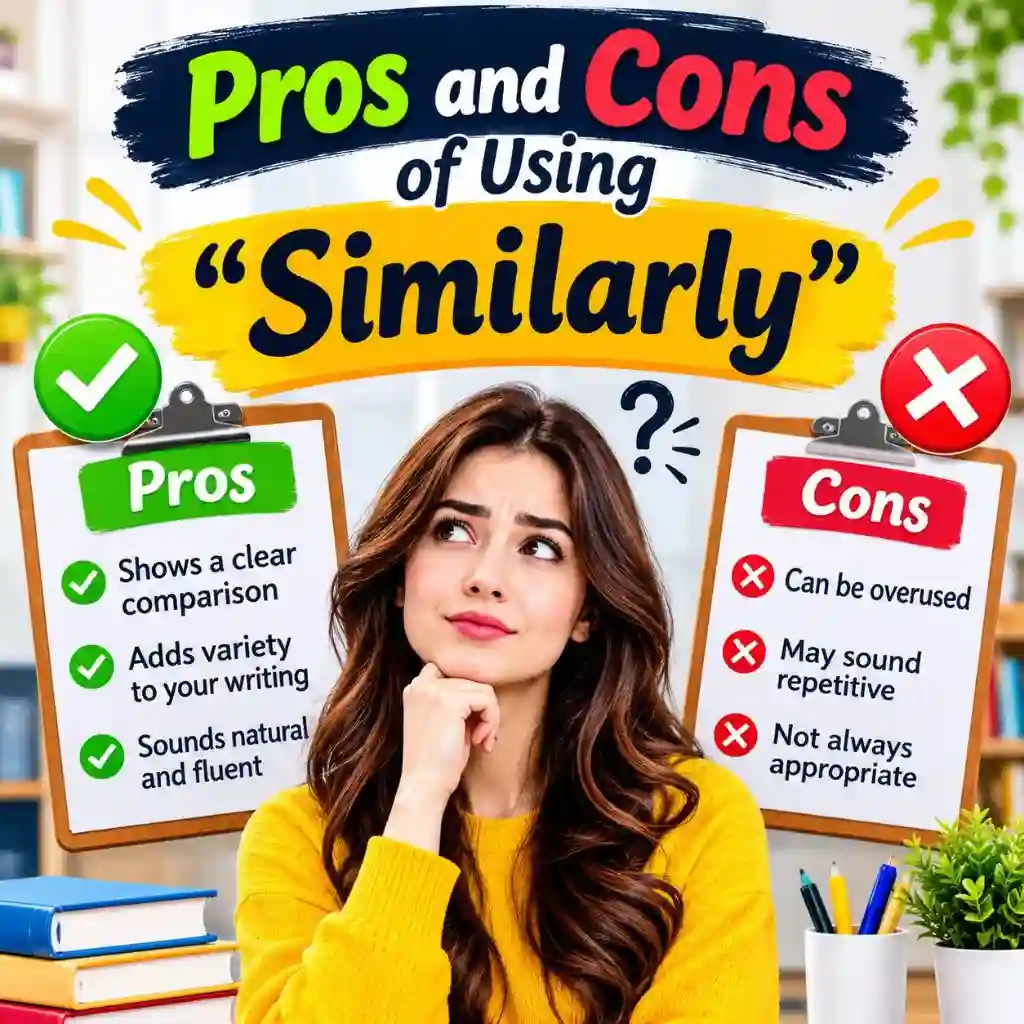
Pros
- Creates Clear Connections: “Similarly” helps readers understand how two ideas, situations, or examples are connected without repeating the same explanation.
- Improves Sentence Flow: It works as a transition word that connects related points and makes paragraphs easier to follow.
- Makes Comparisons Easier: “Similarly” highlights shared features, actions, or results, helping readers recognize important similarities.
- Adds a Professional Tone: It sounds natural in academic writing, business reports, presentations, and professional emails.
- Reduces Repetition: It allows writers to introduce a related idea smoothly instead of using longer phrases such as “in the same way.”
Cons
- Can Make Writing Repetitive: Using “similarly” too often can make paragraphs sound predictable and reduce the variety of transition words.
- May Create Unclear Connections: If two ideas are not closely related, readers may struggle to understand why the writer uses “similarly.”
- Can Sound Too Formal: In casual conversations or friendly messages, simpler words like “also” or “too” may sound more natural.
- Does Not Explain Every Difference: “Similarly” emphasizes shared features but may hide important differences between two situations.
- Can Weaken Sentence Meaning: Adding “similarly” without a clear comparison may make a sentence longer without giving readers useful information.
Frequently Asked Questions
1. What Does Similarly Mean in Simple English?
Similarly means in a similar way or manner. It shows that two people, actions, situations, or ideas share common features. For example, “Ali enjoys reading. Similarly, Sara loves books.” Both people have a shared interest in reading.
2. What Are the Best Synonyms for Similarly?
Some common synonyms for similarly include likewise, equally, comparably, correspondingly, and analogously. You can also use phrases such as in the same way, in a similar manner, and along similar lines. The best choice depends on your sentence and intended meaning.
3. Is Similarly a Formal or Informal Word?
Similarly is suitable for both formal and informal communication. It is especially common in academic essays, business reports, professional emails, and everyday explanations. Its tone is neutral, so it fits different writing situations.
4. How Do You Use Similarly in a Sentence?
You can use similarly to connect two related ideas or explain how something resembles another situation. For example, “Exercise improves physical health. Similarly, proper sleep supports overall well-being.” When it begins a new sentence as a transition, place a comma after it.
5. What Is the Difference Between Similarly and Likewise?
Both similarly and likewise show a connection between ideas or actions. Similarly often introduces a comparison, while likewise can also express agreement or show that something applies to another person. For example, “I enjoyed the event. Likewise, my friends had a great time.”
6. Can I Start a Sentence With Similarly?
Yes, you can start a sentence with similarly. It is a useful transition word for introducing a related point or comparison. For example, “The first method saves time. Similarly, the second method reduces unnecessary work.” Remember to use a comma after similarly.
7. Is Similarly the Same as Equally?
No, these words have slightly different meanings. Similarly describes something that happens or exists in a comparable way, while equally emphasizes the same degree, amount, or level. For example, two people may work similarly without contributing equally.
8. What Is the Opposite of Similarly?
The opposite of similarly depends on the context. Common alternatives include differently, dissimilarly, otherwise, and in a different way. These expressions describe actions, qualities, or situations that do not follow the same pattern.
9. Is Similarly a Transition Word?
Yes, similarly is a transition word that connects related sentences, paragraphs, and ideas. It helps readers understand relationships between different points and makes academic or professional writing easier to follow.
10. Can I Use Similarly in Professional Emails?
Yes, similarly is appropriate for professional emails when you want to connect related information or compare two situations. For example, “Our sales team completed its monthly targets. Similarly, the marketing team achieved its campaign goals.” It creates a clear and professional connection.
Conclusion
Similarly is a useful English adverb that means in a similar way, in the same manner, or to a comparable extent. It helps connect related ideas, explain shared qualities, and make comparisons easier to understand. Whether you are writing an academic essay, preparing a business report, or having an everyday conversation, using similarly correctly can improve your communication.
Learning its synonyms and alternative expressions, such as likewise, equally, correspondingly, and in the same way, gives you more options when expressing comparisons. However, each alternative has a slightly different meaning. For example, equally focuses on the same degree, while likewise can express agreement or a shared experience. Choosing the right expression makes your sentences more accurate and natural.
The best way to understand similarly and its usage is to practice with real sentences and different communication situations. Pay attention to how the word connects two related points, and avoid using it when the ideas have no clear relationship. With regular practice, you can use similarly confidently and make your English writing clearer, smoother, and more effective.
Read More:
40+Ways to Say “This Is To Inform You”(With Examples 2026)
40+ Other Ways to Say “Stay Tuned”(With Examples 2026)
45+Other Ways to Say “Please Note” (With Examples 2026)
39+ Best Ways to Say “Get Over Here” (With Examples 2026)
40+ Other Ways to Say “Sincerely” with Example
41+ Other Ways to Say “Sorry To Bother You”with Example
42+ Other Ways to Say “I will do my best” with Example
40+ Ways to Say “Best practice”with Example
41+ Ways to Say Email Receipt with Example
39+Ways to Say “You Are Most Welcome” Easily

I’m Jane Austen, the admin of GrammarGuide.com, where words come to life in smarter, sharper, and more creative ways. I focus on simplifying grammar, exploring powerful synonyms, and sharing fun, engaging expressions that make everyday communication more effective. My goal is to help readers write with clarity, confidence, and a touch of personality, whether it’s for professional use or just for fun.