Have you ever met someone for the first time and wondered what to say, how to introduce yourself, or how to make a good first impression? That is where a meet and greet comes in. It is a friendly interaction or organized event where people meet, exchange greetings, and get to know each other. Whether it happens at a social gathering, business meeting, fan event, or professional introduction, the goal is to create a positive connection.
Understanding the meaning of meet and greet helps you use this common English expression correctly in different situations. It is more than simply saying hello; it often involves introducing yourself, starting conversations, showing interest, and building relationships. Knowing how a meet-and-greet event works can also make you feel more confident when meeting new people, attending networking sessions, or greeting someone important.
In this guide, you will discover what meet and greet means, how to use it in sentences, where people commonly use it, and why it matters. You will also explore practical examples, common situations, and helpful communication tips. By the end, you will know how to use this expression naturally and make your first meetings more comfortable, friendly, and meaningful.
What Does “Meet and Greet” Mean?
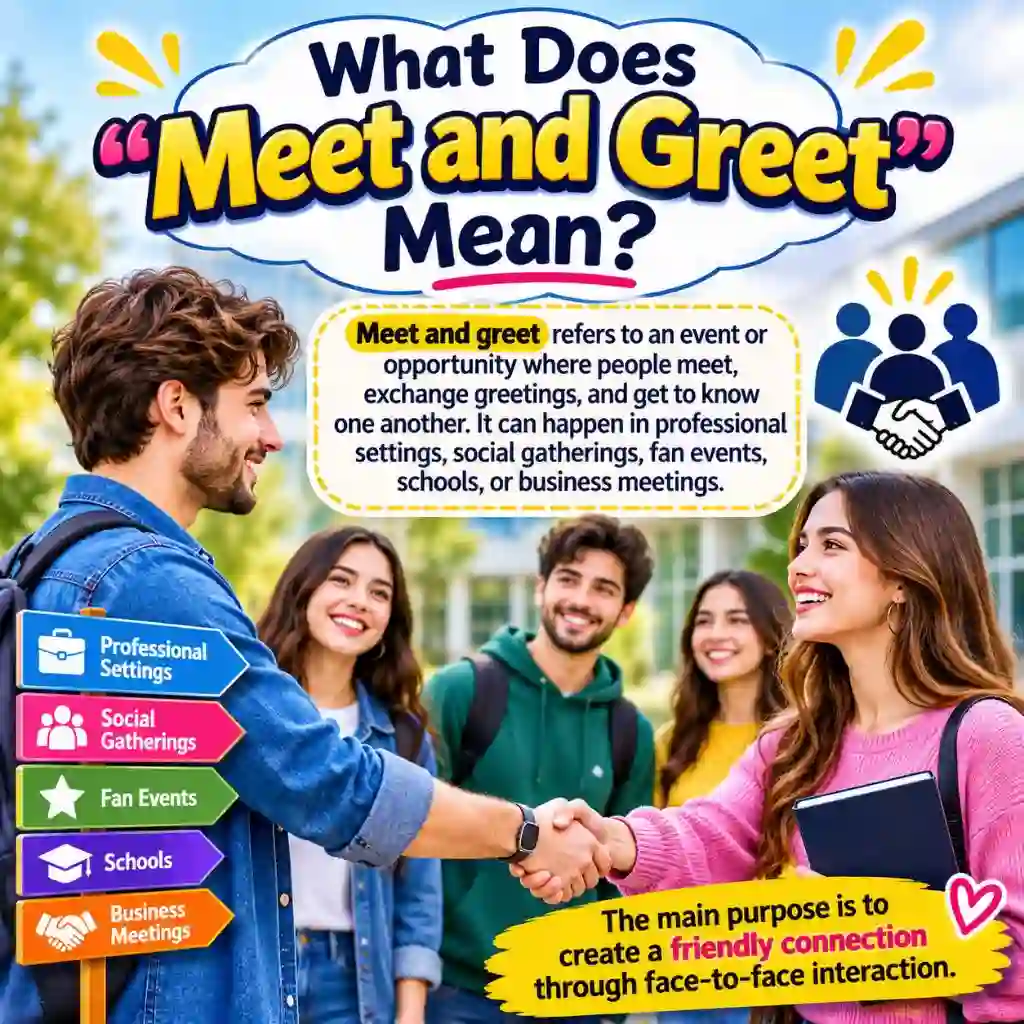
Meet and greet refers to an event or opportunity where people meet, exchange greetings, and get to know one another. It can happen in professional settings, social gatherings, fan events, schools, or business meetings. The main purpose is to create a friendly connection through face-to-face interaction.
For example, a company may organize a meet and greet to introduce new employees to their team. Similarly, celebrities may arrange fan meetings to interact with their supporters. The expression can describe both a planned event and the simple act of meeting someone for the first time.
What Are Other Ways to Say “Meet and Greet”?
There are several expressions you can use instead of meet and greet, depending on the situation, audience, and purpose. Some alternatives sound casual, while others are more suitable for professional communication.
- Get-Together: An informal gathering where people meet and spend time together.
- Welcome Reception: An organized event for welcoming guests or newcomers.
- Networking Event: A professional gathering for building business connections.
- Meet-Up: A casual meeting between people with shared interests.
- Social Gathering: An event where people interact and enjoy each other’s company.
- Introduction Session: A planned activity where participants introduce themselves.
- Face-to-Face Meeting: A direct, in-person conversation between people.
- Social Mixer: A relaxed event designed to help attendees meet new people.
- Personal Introduction: A direct introduction that shares basic information about someone.
- Fan Meeting: An event where supporters meet a celebrity or public figure.
What Is a Professional Alternative to “Meet and Greet”?
A professional alternative to meet and greet depends on the purpose of the event. In business communication, expressions such as networking event, introductory meeting, welcome reception, and professional gathering often sound more appropriate.
For example, a company can use introductory meeting when introducing new employees to their colleagues. A business organization may choose networking reception when bringing professionals together to exchange ideas and contacts. Similarly, welcome reception works well for conferences, corporate events, and official gatherings.
Here are some useful professional alternatives:
- Introductory Meeting: Best for introducing new employees, clients, or business partners.
- Networking Reception: Suitable for professional events and business connections.
- Welcome Reception: Appropriate for welcoming guests and new team members.
- Professional Gathering: Useful for organized workplace and industry events.
- Business Networking Session: Ideal for discussing opportunities and building professional relationships.
Read More: 47+Other Ways to Say “Till Death Do Us Part”(With Examples)
How Can You Use “Meet and Greet” Alternatives in a Sentence?
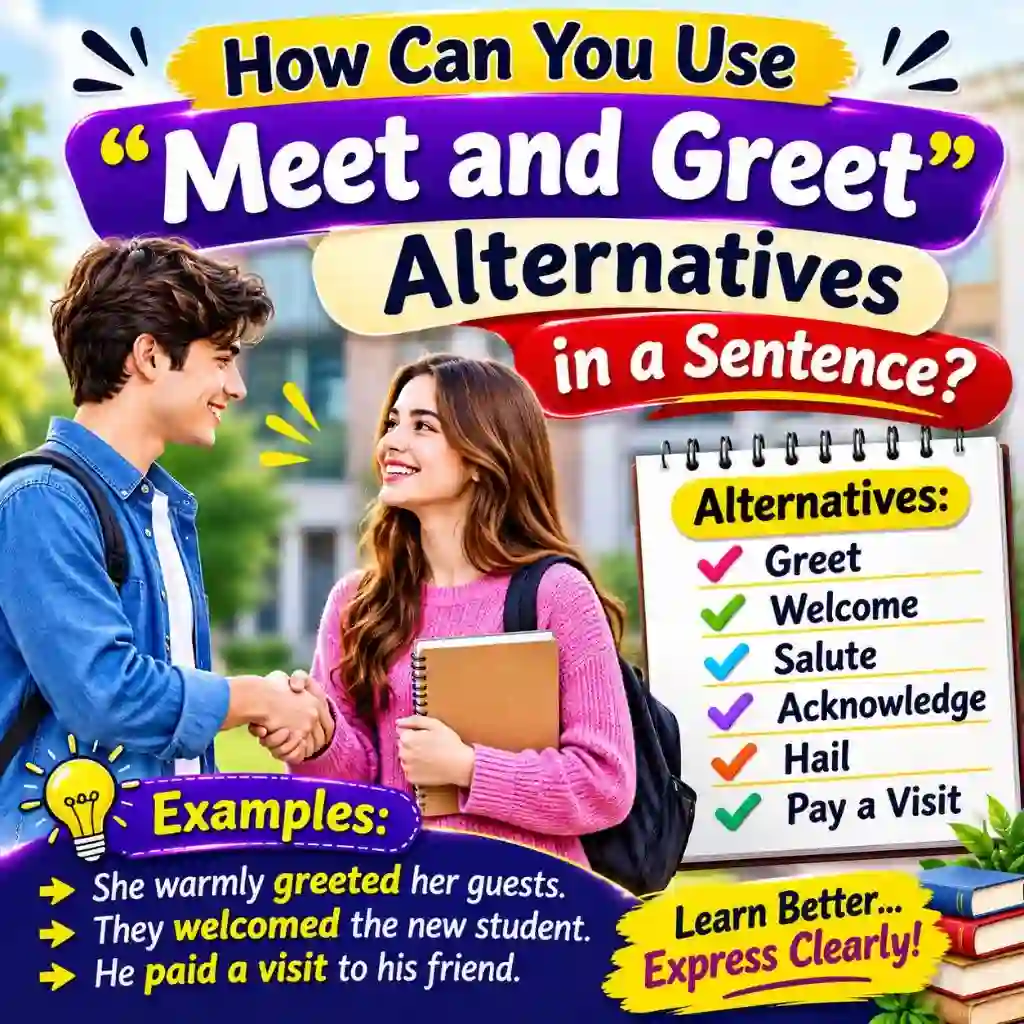
You can use different alternatives to meet and greet by matching the expression with the situation. A casual gathering, workplace introduction, and professional networking event may all involve meeting people, but each requires slightly different wording.
Here are some natural examples:
- Get-Together: “We are planning a family get-together this Sunday.”
- Welcome Reception: “The company organized a welcome reception for its new employees.”
- Networking Event: “I met several business owners at the networking event.”
- Meet-Up: “Our photography group is arranging a weekend meet-up.”
- Social Gathering: “The neighborhood hosted a social gathering for new residents.”
- Introduction Session: “The training program started with an introduction session.”
- Face-to-Face Meeting: “I would prefer a face-to-face meeting to discuss the project.”
- Social Mixer: “The college arranged a social mixer for first-year students.”
- Personal Introduction: “Everyone gave a short personal introduction before the discussion.”
- Fan Meeting: “The actor announced a fan meeting for his supporters.”
When Should You Use Different Expressions Instead of “Meet and Greet”?
You should choose a different expression when meet and greet does not clearly describe the purpose, setting, or level of formality of an interaction. The right wording makes your message more natural and helps readers understand exactly what kind of meeting you mean.
Consider these situations:
- In Professional Emails: Use introductory meeting or networking session when discussing workplace introductions or business connections.
- At Social Events: Choose get-together or social gathering for casual meetings with friends, family, or neighbors.
- At Conferences: Use welcome reception or networking reception when guests are invited to interact before or after the main program.
- In Educational Settings: Choose introduction session when students or teachers introduce themselves in a classroom or training program.
- In Celebrity Events: Use fan meeting when a public figure meets supporters for photographs, conversations, or other planned activities.
The key is to consider your audience, purpose, and communication style before choosing an alternative. A casual expression may sound natural among friends, while a professional term creates a clearer impression in business communication.
Alternative ways to say Meet and Greet
1. Get-Together

Meaning/Definition:
An informal social gathering where people come together to meet, talk, and enjoy each other’s company.
Explanation:
It describes a relaxed meeting with friends, family members, or coworkers. Like a meet and greet, a get-together helps people connect and build friendly relationships, but it does not always involve formal introductions.
Example:
“We are planning a small get-together to welcome our new neighbors.”
Best Use:
- Casual meetings with friends and family.
- Informal social gatherings.
Worst Use:
- Formal business introductions.
- Official conferences and interviews.
Tone: Casual, friendly, welcoming.
2. Welcome Reception
Meaning/Definition:
An organized event where guests receive a warm welcome and have an opportunity to meet other attendees.
Explanation:
A welcome reception usually takes place at conferences, universities, workplaces, or special events. It helps newcomers feel comfortable while giving them time to introduce themselves and make connections.
Example:
“The university organized a welcome reception for new students.”
Best Use:
- Welcoming new employees or students.
- Opening events and formal gatherings.
Worst Use:
- Casual conversations between close friends.
- Describing a private one-to-one introduction.
Tone: Warm, formal, welcoming.
3. Networking Event
Meaning/Definition:
A professional gathering where people meet to share ideas, exchange information, and build business connections.
Explanation:
A networking event gives professionals a chance to introduce themselves, discuss their work, and connect with people in similar industries. It serves a purpose beyond a simple greeting because it can lead to career opportunities and professional relationships.
Example:
“I met several business owners at the networking event yesterday.”
Best Use:
- Professional conferences and business gatherings.
- Career development and industry connections.
Worst Use:
- Casual family gatherings.
- Informal conversations with close friends.
Tone: Professional, confident, collaborative.
Read More: 35+ Other Ways to Say “Growing Up” with Examples
4. Meet-Up
Meaning/Definition:
An informal planned meeting where people come together to talk, share interests, or spend time with one another.
Explanation:
People often use meet-up for casual gatherings involving friends, online communities, hobby groups, or people with similar interests. It can describe a simple face-to-face meeting without the formal structure of an organized meet-and-greet event.
Example:
“We arranged a weekend meet-up for everyone in our photography group.”
Best Use:
- Meetings with friends or online communities.
- Hobby groups and interest-based gatherings.
Worst Use:
- Formal corporate receptions.
- Official interviews and business presentations.
Tone: Relaxed, friendly, informal.
5. Social Gathering
Meaning/Definition:
An event where people come together to socialize, communicate, and enjoy time together.
Explanation:
A social gathering can include a party, family event, community celebration, or workplace function. It gives attendees an opportunity to meet new people, reconnect with familiar faces, and develop personal relationships.
Example:
“The neighborhood organized a social gathering to welcome new residents.”
Best Use:
- Community celebrations and family events.
- Parties and friendly group meetings.
Worst Use:
- Formal business negotiations.
- Technical or official meetings.
Tone: Friendly, social, welcoming.
6. Introduction Session
Meaning/Definition:
A planned session where people introduce themselves and become familiar with others in a group or organization.
Explanation:
An introduction session is useful when people meet for the first time in a classroom, workplace, training program, or professional event. It allows everyone to share basic information and understand who is participating.
Example:
“Our trainer started the first class with an introduction session.”
Best Use:
- New employee orientation.
- Classroom and training activities.
Worst Use:
- Casual parties without planned introductions.
- Conversations between people who already know each other.
Tone: Informative, welcoming, organized.
7. Welcome Event
Meaning/Definition:
An organized occasion designed to greet newcomers and make them feel included in a group, workplace, or community.
Explanation:
A welcome event can include speeches, introductions, refreshments, and friendly conversations. Its main purpose is to help new members feel comfortable and begin building relationships with the people around them.
Example:
“The school arranged a welcome event for students joining this year.”
Best Use:
- Welcoming new students or employees.
- Introducing new community members.
Worst Use:
- Describing an ordinary private conversation.
- Formal discussions that require no social interaction.
Tone: Warm, positive, inviting.
8. Greet and Connect
Meaning/Definition:
An expression that describes welcoming someone and creating a personal or professional connection through conversation.
Explanation:
Greet and connect focuses on two important parts of meeting someone: offering a friendly greeting and starting a meaningful interaction. It is useful when the goal is to make people feel welcome rather than simply exchange names.
Example:
“Our team will greet and connect with visitors as they arrive.”
Best Use:
- Customer welcome activities.
- Community and professional networking events.
Worst Use:
- Formal reports requiring precise technical language.
- Situations where no personal interaction takes place.
Tone: Friendly, engaging, approachable.
Read More: 35+ Other Ways to Say “Similarly” with Examples
9. Face-to-Face Meeting
Meaning/Definition:
A meeting where people communicate in person instead of using phone calls, emails, or video chats.
Explanation:
A face-to-face meeting allows people to understand expressions, body language, and reactions more clearly. It is especially helpful when building trust, discussing important matters, or getting to know someone personally.
Example:
“I would prefer a face-to-face meeting before starting the project.”
Best Use:
- Job interviews and business discussions.
- Personal introductions and important conversations.
Worst Use:
- Describing online meetings.
- Situations where participants communicate only through email.
Tone: Direct, professional, personal.
10. Meet and Connect
Meaning/Definition:
An expression describing an opportunity to meet new people and develop meaningful relationships through conversation.
Explanation:
Meet and connect highlights the social purpose of an introduction. It is often used for events where attendees are encouraged to exchange ideas, learn about one another, and build friendships or professional relationships.
Example:
“The event gives local business owners a chance to meet and connect.”
Best Use:
- Business networking activities.
- Community and social events.
Worst Use:
- Technical instructions or official reports.
- Situations that require no interaction between people.
Tone: Friendly, positive, collaborative.
11. Networking Reception
Meaning/Definition:
A professional social event where attendees meet other professionals and develop useful business connections.
Explanation:
A networking reception often takes place before or after a conference, seminar, or business meeting. It provides a relaxed setting for introductions, professional conversations, and exchanging contact information.
Example:
“The conference ended with a networking reception for all attendees.”
Best Use:
- Business conferences and industry events.
- Professional introductions and career connections.
Worst Use:
- Casual family gatherings.
- Informal meetings with close friends.
Tone: Professional, social, welcoming.
12. Social Mixer
Meaning/Definition:
A relaxed social event designed to help people meet, interact, and become familiar with one another.
Explanation:
A social mixer usually brings together people who may not know each other. Activities, refreshments, and group conversations help break the ice and make introductions easier.
Example:
“The college hosted a social mixer to help new students make friends.”
Best Use:
- College and workplace social events.
- Community networking activities.
Worst Use:
- Formal interviews.
- Serious business negotiations.
Tone: Casual, lively, welcoming.
13. Welcome Gathering
Meaning/Definition:
A friendly event where people gather to welcome someone new or celebrate their arrival.
Explanation:
A welcome gathering gives newcomers an opportunity to meet members of a group and feel included. It can take place at home, school, work, or within a local community.
Example:
“Our neighbors arranged a welcome gathering for the family that recently moved in.”
Best Use:
- Welcoming new neighbors.
- Introducing new team or community members.
Worst Use:
- Formal business presentations.
- Technical workplace discussions.
Tone: Warm, friendly, thoughtful.
14. Personal Introduction
Meaning/Definition:
A short introduction in which someone shares their name, background, or relevant information with another person.
Explanation:
A personal introduction helps people understand who they are meeting and creates a starting point for conversation. It is common during interviews, classroom activities, business meetings, and social gatherings.
Example:
“Before the workshop began, everyone gave a brief personal introduction.”
Best Use:
- Job interviews and professional meetings.
- First meetings with new people.
Worst Use:
- Situations where everyone already knows each other.
- Group events that do not require individual introductions.
Tone: Polite, confident, informative.
Read More: 35+ Other Ways to Say “After Careful Consideration”
15. Fan Meeting
Meaning/Definition:
An organized event where fans meet a celebrity, entertainer, artist, or public figure in person.
Explanation:
Fan meetings give supporters an opportunity to interact with someone they admire. Depending on the event, fans may ask questions, take photographs, receive autographs, or attend a short discussion.
Example:
“The singer announced a fan meeting for supporters visiting the city.”
Best Use:
- Celebrity and artist events.
- Entertainment and fan community gatherings.
Worst Use:
- Ordinary workplace introductions.
- Business meetings unrelated to fans or celebrities.
Tone: Excited, personal, enthusiastic.
16. Guest Reception
Meaning/Definition:
An organized occasion where visitors or invited guests are welcomed and introduced to others.
Explanation:
A guest reception is common at hotels, conferences, official functions, and special celebrations. Hosts use it to greet visitors, provide assistance, and create a comfortable atmosphere for conversation.
Example:
“The organizers held a guest reception before the main conference started.”
Best Use:
- Official events and conferences.
- Welcoming invited visitors or special guests.
Worst Use:
- Casual conversations between friends.
- Unplanned meetings without invited guests.
Tone: Respectful, formal, hospitable.
17. Community Gathering
Meaning/Definition:
An event where members of a local community come together to meet, communicate, and share experiences.
Explanation:
Community gatherings help neighbors and local groups build relationships. They can also provide opportunities to discuss local activities, welcome new residents, and share information about community projects.
Example:
“The town arranged a community gathering to introduce new residents to their neighbors.”
Best Use:
- Neighborhood and local group events.
- Community celebrations and meetings.
Worst Use:
- Private one-to-one introductions.
- Formal corporate interviews.
Tone: Inclusive, friendly, cooperative.
18. Informal Meeting
Meaning/Definition:
A relaxed discussion between two or more people without the strict structure of a formal business meeting.
Explanation:
Informal meetings allow people to exchange ideas, ask questions, and get to know each other naturally. They are useful when a conversation does not require an official agenda or detailed presentation.
Example:
“We had an informal meeting to discuss the new project and introduce ourselves.”
Best Use:
- Casual workplace discussions.
- Initial conversations with colleagues or clients.
Worst Use:
- Official interviews requiring a structured process.
- Legal or highly formal business proceedings.
Tone: Relaxed, conversational, approachable.
19. Greeting Session
Meaning/Definition:
A planned activity or period when people welcome one another and exchange friendly greetings.
Explanation:
A greeting session is often included at the beginning of a class, training program, conference, or group activity. It helps participants feel comfortable before moving on to the main discussion or event.
Example:
“The workshop began with a short greeting session for all participants.”
Best Use:
- Training programs and classroom activities.
- Organized group introductions.
Worst Use:
- Detailed business negotiations.
- Describing a full social celebration.
Tone: Polite, welcoming, organized.
Read More: 42+Ways to Say “My Mind is Made Up”(With Examples)
20. Connection Event
Meaning/Definition:
An organized gathering that encourages people to meet, communicate, and form new personal or professional relationships.
Explanation:
A connection event brings people together around shared interests, careers, or community goals. It creates opportunities to exchange ideas and discover useful relationships through direct conversation.
Example:
“Our organization is hosting a connection event for local entrepreneurs.”
Best Use:
- Professional networking activities.
- Community and interest-based events.
Worst Use:
- Private conversations between close friends.
- Formal reports or technical instructions.
Tone: Collaborative, friendly, purposeful.
21. Meet-and-Mingle
Meaning/Definition:
A social activity where people meet new individuals and move around freely to start conversations.
Explanation:
Meet-and-mingle describes a relaxed atmosphere where guests are encouraged to interact with different people. Unlike a formal introduction session, it does not require everyone to introduce themselves one by one.
Example:
“The party will include a meet-and-mingle session before dinner.”
Best Use:
- Parties and social celebrations.
- Networking and community events.
Worst Use:
- Formal interviews.
- Structured meetings that require a fixed agenda.
Tone: Relaxed, sociable, friendly.
22. Group Introduction
Meaning/Definition:
A process in which several people introduce themselves to one another during a shared meeting or activity.
Explanation:
Group introductions are useful when participants are meeting for the first time. Each person may share their name, role, interests, or reason for attending, helping everyone understand who is in the group.
Example:
“The teacher asked everyone to take part in a group introduction on the first day.”
Best Use:
- Classroom and training sessions.
- New employee orientation programs.
Worst Use:
- Private one-to-one conversations.
- Informal events where introductions are unnecessary.
Tone: Organized, welcoming, informative.
23. Opening Reception
Meaning/Definition:
A social event held at the beginning of a conference, exhibition, celebration, or official program.
Explanation:
An opening reception welcomes attendees before the main activities begin. Guests can meet organizers, exchange greetings, and become familiar with other participants in a relaxed setting.
Example:
“The art exhibition started with an opening reception for invited guests.”
Best Use:
- Conferences and exhibitions.
- Official launches and special events.
Worst Use:
- Describing an ordinary lunch with friends.
- Meetings that do not involve an opening event.
Tone: Formal, welcoming, celebratory.
24. Social Meet-Up
Meaning/Definition:
A planned but informal meeting where people come together for conversation, friendship, or shared activities.
Explanation:
A social meet-up is often arranged by friends, online groups, or people with common interests. It allows participants to meet in person and develop relationships in a comfortable environment.
Example:
“Our online book club is arranging a social meet-up at a local café.”
Best Use:
- Friend groups and hobby communities.
- Casual meetings with online acquaintances.
Worst Use:
- Official business conferences.
- Formal job interviews.
Tone: Casual, friendly, relaxed.
25. Welcome Meetup
Meaning/Definition:
A planned gathering that gives new members or visitors a chance to meet others and feel welcome.
Explanation:
A welcome meetup is useful for introducing newcomers to a group, organization, or community. It combines friendly greetings with simple conversations, helping people become comfortable and included.
Example:
“The new members are invited to a welcome meetup on Friday evening.”
Best Use:
- Welcoming new group members.
- Introducing newcomers to a community.
Worst Use:
- Formal legal or business proceedings.
- Technical meetings focused on specific tasks.
Tone: Friendly, inviting, inclusive.
Read More: 45+Ways to Say “Go Big or Go Home”(With Examples)
26. Personal Meet-Up
Meaning/Definition:
An arranged in-person meeting between people who want to talk, reconnect, or get to know each other personally.
Explanation:
A personal meet-up usually focuses on direct interaction rather than a large organized event. People may arrange one to discuss something important, catch up with an old friend, or move an online conversation into a face-to-face meeting.
Example:
“After months of chatting online, we finally arranged a personal meet-up.”
Best Use:
- Meeting friends or acquaintances in person.
- Personal conversations and catch-ups.
Worst Use:
- Large professional networking events.
- Formal public receptions.
Tone: Personal, relaxed, conversational.
27. Greeting Event
Meaning/Definition:
An organized occasion where people welcome guests, exchange greetings, and begin interacting.
Explanation:
A greeting event focuses on making visitors or newcomers feel recognized and comfortable. It may be part of a school program, company activity, community celebration, or official function.
Example:
“The company organized a greeting event for its international visitors.”
Best Use:
- Welcoming visitors and new employees.
- Official community or organizational events.
Worst Use:
- Everyday conversations between friends.
- Meetings that focus only on technical work.
Tone: Respectful, welcoming, courteous.
28. Introduction Meeting
Meaning/Definition:
A planned meeting where people introduce themselves and learn about each other’s roles, backgrounds, or responsibilities.
Explanation:
An introduction meeting is useful when new employees, clients, partners, or team members begin working together. It creates a clear starting point for communication and helps everyone understand their connection to the group.
Example:
“We scheduled an introduction meeting so the new team members could get to know one another.”
Best Use:
- New workplace teams and project groups.
- First meetings with clients or business partners.
Worst Use:
- Casual social gatherings.
- Discussions between people who already know each other well.
Tone: Professional, clear, organized.
29. Networking Meetup
Meaning/Definition:
An informal or organized gathering where people meet others with similar professional interests and exchange ideas.
Explanation:
A networking meetup helps professionals, entrepreneurs, and job seekers build useful connections. It may involve short introductions, discussions, and sharing contact details without the formality of a large business conference.
Example:
“I joined a networking meetup to connect with other website developers.”
Best Use:
- Professional interest groups.
- Career and business networking.
Worst Use:
- Family celebrations.
- Personal conversations unrelated to professional interests.
Tone: Professional, approachable, collaborative.
Read More: 49+Ways to Say “Don’t Make A Fuss”(With Examples)
30. Community Meet-Up
Meaning/Definition:
A planned meeting where people from the same community come together to communicate and share common interests.
Explanation:
A community meet-up can help members exchange information, discuss shared concerns, and build stronger relationships. It is often more informal than an official community meeting and may focus on social interaction.
Example:
“Our local community meet-up gives residents a chance to share ideas and meet their neighbors.”
Best Use:
- Local community groups.
- Shared-interest and neighborhood gatherings.
Worst Use:
- Formal corporate interviews.
- Private meetings between two individuals.
Tone: Inclusive, friendly, cooperative.
31. Meet and Chat
Meaning/Definition:
An informal expression meaning to meet someone and have a friendly conversation.
Explanation:
People use meet and chat when they want to describe a relaxed opportunity to talk and become familiar with someone. It is suitable for casual introductions, social invitations, and friendly conversations.
Example:
“Come to the office tomorrow so we can meet and chat about your ideas.”
Best Use:
- Casual invitations and friendly introductions.
- Informal workplace discussions.
Worst Use:
- Official business announcements requiring formal wording.
- Serious legal or technical discussions.
Tone: Friendly, casual, approachable.
32. Meet the Team
Meaning/Definition:
An introduction activity or event where people get to meet the members of a particular team or organization.
Explanation:
Meet the team is commonly used by businesses, schools, and organizations to introduce their members. It helps visitors, customers, or new employees learn who is responsible for different roles and whom they can contact.
Example:
“Our website has a meet the team section where visitors can learn about each employee.”
Best Use:
- Employee introductions and company websites.
- Welcoming new team members.
Worst Use:
- Describing a private meeting between two friends.
- Events where no team is being introduced.
Tone: Professional, informative, welcoming.
33. Guest Welcome
Meaning/Definition:
The act of greeting and making visitors or invited guests feel comfortable when they arrive.
Explanation:
Guest welcome focuses on hospitality and the first interaction between hosts and visitors. It may include a friendly greeting, offering assistance, introducing guests to others, or guiding them through an event.
Example:
“Our staff will handle the guest welcome at the entrance of the conference hall.”
Best Use:
- Hospitality and customer service.
- Weddings, conferences, and private events.
Worst Use:
- Describing a full professional networking session.
- Technical discussions or business reports.
Tone: Courteous, warm, hospitable.
34. Social Networking Session
Meaning/Definition:
An organized activity where people interact socially and build relationships with others who share similar interests or goals.
Explanation:
A social networking session creates time for participants to communicate beyond formal presentations or planned discussions. It can help people make friends, exchange experiences, and develop personal or professional connections.
Example:
“The conference included a social networking session after the final presentation.”
Best Use:
- Conferences and group events.
- Professional and community networking activities.
Worst Use:
- Formal examinations or interviews.
- Private conversations that do not involve group interaction.
Tone: Social, collaborative, engaging.
35. In-Person Introduction
Meaning/Definition:
A direct introduction that takes place when two or more people meet physically and communicate face to face.
Explanation:
An in-person introduction allows people to exchange names, explain their roles, and begin a conversation without relying on digital communication. It is especially useful when establishing trust or creating a personal connection for the first time.
Example:
“I prefer an in-person introduction before working with a new business partner.”
Best Use:
- First meetings with clients or colleagues.
- Professional and personal introductions.
Worst Use:
- Describing introductions made only through email.
- Online meetings where participants are not physically together.
Tone: Direct, personal, professional.
Pros and Cons of “Meet and Greet”
A meet and greet offers several benefits, especially when people want to make new connections, build relationships, or create a positive first impression. However, these events can also have a few drawbacks depending on the setting, number of attendees, and purpose.
Pros of Meet and Greet
- Builds New Relationships: A meet and greet gives people an opportunity to meet new faces, start conversations, and develop meaningful personal or professional relationships.
- Creates a Positive First Impression: Meeting someone in person allows you to show friendliness, confidence, and respect through your words, facial expressions, and body language.
- Improves Communication Skills: Regular introductions help people become more comfortable starting conversations, expressing ideas, and interacting with different personalities.
- Opens Networking Opportunities: Professional meet-and-greet events help attendees connect with business owners, colleagues, clients, and people who may offer future career opportunities.
- Makes People Feel Welcome: A well-organized meet and greet helps newcomers feel included, reduces social discomfort, and creates a friendly environment for everyone.
Cons of Meet and Greet
- Can Feel Awkward at First: People who are shy or uncomfortable around strangers may struggle to introduce themselves or start conversations.
- Takes Time and Planning: Organizing a successful meet and greet requires scheduling, preparation, invitations, and sometimes a suitable venue.
- May Create Social Pressure: Some attendees feel expected to talk, introduce themselves, and interact with everyone, which can make the experience stressful.
- Does Not Guarantee Meaningful Connections: Meeting someone once does not always lead to a lasting friendship, business relationship, or useful professional connection.
- Can Become Overcrowded: Large meet-and-greet events may make personal conversations difficult, limit individual attention, and prevent attendees from connecting properly.
Frequently Asked Questions
1. What Is Another Word for Meet and Greet?
Some common alternatives to meet and greet include get-together, welcome reception, social gathering, meet-up, and introduction session. The best choice depends on whether the interaction is casual, social, or professional.
2. Is Meet and Greet Formal or Informal?
Meet and greet can be both formal and informal. It describes casual gatherings with friends as well as organized business events, celebrity appearances, and professional introductions.
3. What Is a Professional Way to Say Meet and Greet?
Professional alternatives include introductory meeting, networking reception, welcome session, and professional gathering. These expressions work well in business emails, workplace announcements, and corporate events.
4. What Is the Purpose of a Meet and Greet?
The main purpose is to help people meet, exchange greetings, and build connections. It also gives newcomers an opportunity to feel welcome and become familiar with others.
5. Can Meet and Greet Be Used in Business?
Yes, businesses often organize meet-and-greet events to introduce employees, welcome clients, connect with partners, and encourage professional networking.
6. Is Meet and Greet the Same as a Networking Event?
Not exactly. A meet and greet mainly focuses on introductions and initial interactions, while a networking event focuses more on building professional relationships, sharing ideas, and creating business opportunities.
7. How Do You Use Meet and Greet in a Sentence?
You can use it to describe an event or an opportunity to meet someone. For example: “The company is hosting a meet and greet for its new employees on Monday.”
8. What Is a Casual Alternative to Meet and Greet?
Casual alternatives include get-together, meet-up, social gathering, and meet-and-mingle. These expressions are suitable for friendly gatherings, parties, and informal meetings.
9. Should Meet and Greet Have Hyphens?
The expression is commonly written as meet and greet when used as a noun phrase. The hyphenated form meet-and-greet is also widely used as a compound modifier, such as “a meet-and-greet event.”
10. What Is the Difference Between Meet and Greet and Introduction?
Meet and greet usually describes an event or interaction where people meet and exchange greetings. An introduction specifically involves presenting someone to another person or sharing basic information about yourself.
Conclusion
Meet and greet is a common English expression used for events and interactions where people meet, exchange greetings, and build connections. It works in different settings, including business meetings, social gatherings, school activities, and celebrity events. Understanding its meaning helps you recognize how people use it in everyday and professional communication.
There are many useful alternatives, such as get-together, welcome reception, networking event, meet-up, and introductory meeting. Each expression has a slightly different purpose and level of formality. Choosing the right one makes your sentences clearer and helps you communicate naturally with different audiences.
Whether you are writing a professional email, inviting friends to an event, or introducing new team members, always consider the situation before choosing your words. Using the right meet and greet alternative can make your message more accurate, friendly, and appropriate.

Hi, I am Zadie Smith, the author of Grammargide.com. I write clear, easy-to-understand guides that explain commonly confused words and phrases, helping readers choose the right expression with confidence.