I have often heard people use the phrase “Growing Up” when talking about childhood memories, life changes, and becoming more mature. But its meaning goes beyond simply getting older. Growing up describes the journey of developing physically, mentally, and emotionally while learning from experiences, facing challenges, and understanding life. It can also describe how our thoughts, behavior, and responsibilities change over time.
Understanding the meaning of growing up is important because this phrase appears in everyday conversations, personal stories, books, and social situations. People use it to discuss childhood experiences, maturity, personal development, and adult responsibilities. Learning how to use this expression correctly can improve your English communication and help you express life experiences more naturally. It also helps you understand the difference between simply getting older and becoming more mature.
In this guide, you will learn what growing up means, how to use it in different contexts, and how it appears in real-life sentences. You will also discover its common expressions, practical examples, and the situations where it sounds most natural. By the end, you will have a clearer understanding of growing up and feel more confident using this phrase in everyday English.
What Does “Growing Up” Mean?
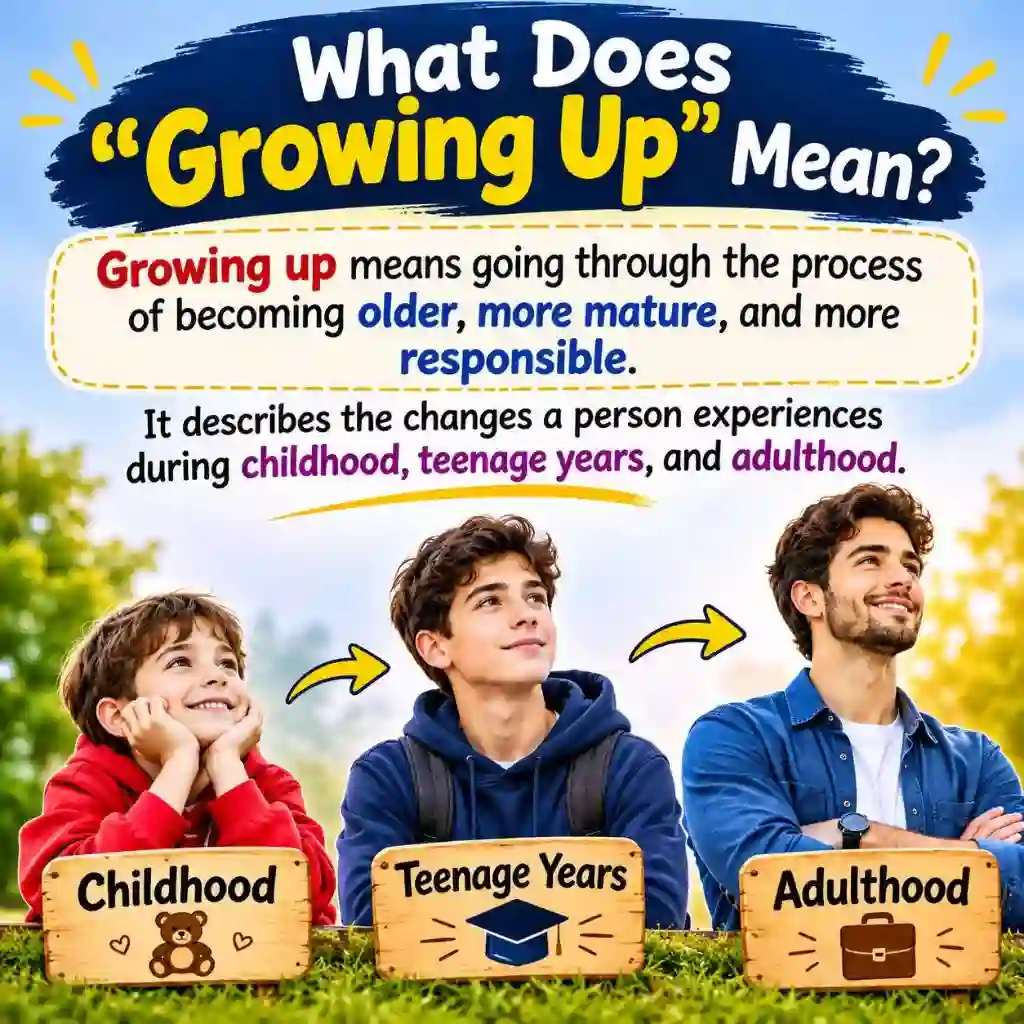
Growing up means going through the process of becoming older, more mature, and more responsible. It describes the changes a person experiences during childhood, teenage years, and adulthood. These changes are not only physical but also include emotional development, mental growth, independent thinking, better decision-making, and learning how to handle life’s responsibilities. For example, a child gradually learns to understand other people’s feelings, solve problems, make personal choices, and become less dependent on parents.
The phrase also has a deeper meaning in everyday English. People often use growing up to describe how life experiences shape their personality, attitude, behavior, and outlook on life. It can refer to learning from mistakes, accepting responsibilities, developing confidence, and understanding the difference between right and wrong. Someone might say, “Growing up taught me to value my family,” to explain how personal experiences changed their way of thinking.
What Is Another Word for “Growing Up”?
There are several words and expressions that can replace growing up, depending on the meaning and situation. Maturing is one of the closest alternatives because it describes becoming more sensible, emotionally developed, and responsible. Other useful words include developing, aging, evolving, progressing, and coming of age. Each expression has a slightly different meaning, so choosing the right one helps make your writing and conversations more accurate.
For example, maturing focuses on emotional and mental development, while aging mainly refers to getting older. Coming of age describes reaching an important stage of adulthood or gaining a deeper understanding of adult responsibilities. Similarly, personal development refers to improving your skills, confidence, behavior, and mindset over time. These alternatives are useful when discussing childhood memories, life experiences, education, relationships, or changes in personality.
What Are Different Ways to Express “Growing Up”?
You can express growing up in several ways depending on whether you are discussing physical development, emotional maturity, or the experience of becoming an adult. Common expressions include getting older, becoming mature, coming of age, developing as a person, and learning life’s lessons. These phrases help explain different parts of the journey from childhood to adulthood without repeating the same words. For example, “She is becoming more mature” highlights a change in behavior, while “He is coming of age” suggests an important transition toward adulthood.
Other natural expressions include learning to stand on your own feet, taking responsibility, becoming independent, and finding your identity. These are especially useful when talking about real-life experiences, such as moving away from home, starting a career, managing money, or making important life decisions. In casual conversations, you can say, “I’m learning to be independent,” instead of simply saying, “I’m growing up.” The best expression depends on the message you want to communicate and the context in which you are speaking.
Read More: 35+ Other Ways to Say “After Careful Consideration”
How Can You Say “Growing Up” in Different Words?
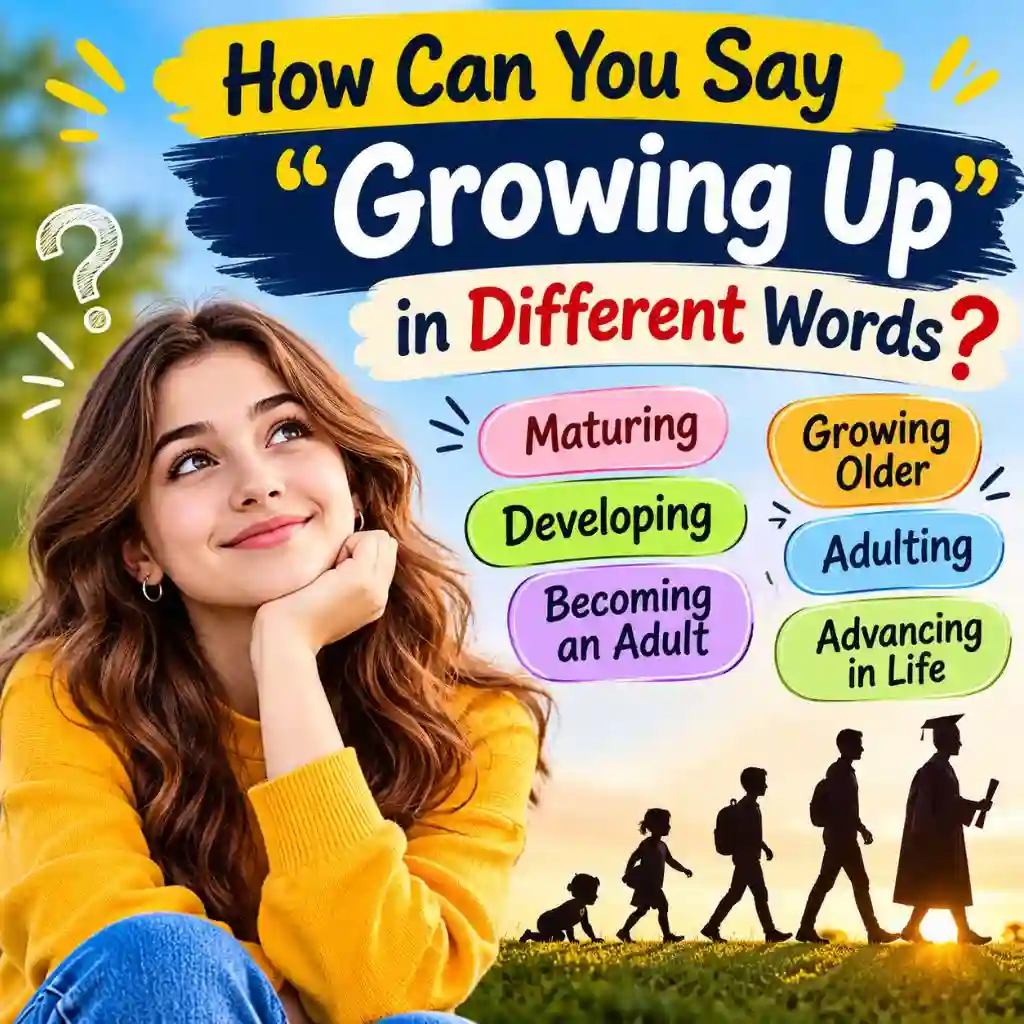
If you want to avoid repeating growing up in your writing or conversations, you can use alternative words and phrases that express the same general idea. For example, becoming an adult, reaching maturity, developing independence, progressing through life, and experiencing personal growth are useful alternatives. Each phrase brings a slightly different focus to the sentence. “Becoming an adult” emphasizes age and adulthood, while “developing independence” focuses on learning to manage life without constant support from others.
Here are some practical examples:
- Growing up: I learned many important lessons growing up.
- Maturing: I became more responsible as I matured.
- Coming of age: She experienced many changes while coming of age.
- Getting older: We understand life differently as we get older.
- Becoming independent: He is becoming independent and making his own decisions.
- Personal development: Personal development has helped me build confidence.
- Learning responsibility: Growing older also means learning responsibility.
These alternatives make your English sound more natural, clear, and expressive. However, they are not always exact replacements. For instance, getting older refers mainly to age, whereas maturing describes changes in behavior, judgment, and emotional understanding. Always choose the phrase that matches your intended meaning.
Read More: 35+ Other Ways to Say “Similarly” with Examples
How Do You Use “Growing Up” in Everyday Conversations?
The phrase growing up is commonly used in everyday English when people talk about their childhood, family background, personal experiences, and changes in their lives. It often appears when sharing memories or explaining how someone developed a particular habit, interest, or personality trait. For example, “Growing up, I spent most of my weekends playing outside” describes a childhood experience. Similarly, “I learned the importance of honesty while growing up” connects a life lesson with personal development.
You can also use growing up when discussing maturity, responsibilities, relationships, and independence. Friends might say, “We are all growing up and following different paths,” while parents may use the phrase to describe their children’s development. In casual discussions, it can also express nostalgia, such as remembering school days, childhood friendships, family traditions, or memorable experiences. Understanding these different uses helps you communicate naturally and confidently in personal conversations, storytelling, and written English.
Alternative Ways to Say “Growing Up”
1. In My Childhood

Meaning/Definition:
A phrase that refers to the period when someone was a child and describes experiences from their early life.
Explanation:
It is commonly used when talking about childhood memories, family traditions, school experiences, and activities enjoyed at a young age. It connects past experiences with the present.
Example:
“In my childhood, I enjoyed spending summer vacations at my grandparents’ house.”
Best Use:
- Sharing personal childhood memories.
- Writing about early life experiences.
Worst Use:
- Discussing recent adult experiences.
- Describing events that happened only recently.
Tone: Personal, nostalgic, reflective.
2. During My Early Years
Meaning/Definition:
A phrase that describes the first stages of someone’s life, especially their childhood and early development.
Explanation:
It is useful when discussing early education, family influence, childhood development, and experiences that helped shape someone’s personality. It sounds slightly more formal than “when I was little.”
Example:
“During my early years, my parents encouraged me to read books and explore new interests.”
Best Use:
- Personal biographies and life stories.
- Interviews and formal conversations.
Worst Use:
- Discussing a specific event from adulthood.
- Describing a recent experience.
Tone: Formal, reflective, informative.
3. As a Child
Meaning/Definition:
A simple expression that means when someone was young and had not yet reached adulthood.
Explanation:
This phrase is a natural alternative to growing up when describing childhood behavior, interests, experiences, and memories. It also works well when comparing your younger personality with who you are today.
Example:
“As a child, I loved drawing pictures and playing outdoor games with my friends.”
Best Use:
- Casual conversations about childhood.
- Personal stories and written memories.
Worst Use:
- Describing changes that happened specifically during adulthood.
- Discussing professional experiences from later life.
Tone: Friendly, simple, nostalgic.
4. While I Was Young
Meaning/Definition:
An expression that refers to a period when someone was younger, usually during childhood or their teenage years.
Explanation:
People use this phrase to connect past experiences with present interests or achievements. It is helpful when discussing childhood activities, early ambitions, and lessons learned before adulthood.
Example:
“While I was young, I dreamed of becoming a successful computer programmer.”
Best Use:
- Sharing old ambitions and interests.
- Explaining how childhood experiences influenced you.
Worst Use:
- Describing a recent adult experience.
- Situations that require an exact date or age.
Tone: Conversational, reflective, personal.
5. Throughout My Childhood
Meaning/Definition:
A phrase that means during the entire period of someone’s childhood, rather than at one particular moment.
Explanation:
It emphasizes experiences that continued over time. It works especially well when discussing family traditions, education, friendships, hobbies, and repeated childhood activities.
Example:
“Throughout my childhood, my family celebrated every birthday together.”
Best Use:
- Describing long-lasting childhood experiences.
- Writing autobiographies and personal stories.
Worst Use:
- Describing a single childhood event.
- Discussing experiences that started only in adulthood.
Tone: Reflective, descriptive, nostalgic.
Read More: 42+Ways to Say “My Mind is Made Up”(With Examples)
6. In My Younger Days
Meaning/Definition:
An expression that refers to an earlier period of someone’s life when they were younger and less experienced.
Explanation:
People commonly use it when remembering old hobbies, friendships, adventures, and lifestyle choices. It often carries a nostalgic feeling and helps compare past experiences with present circumstances.
Example:
“In my younger days, I enjoyed riding my bicycle around the neighborhood.”
Best Use:
- Casual conversations about old memories.
- Stories about past interests and activities.
Worst Use:
- Highly formal business reports.
- Situations requiring a precise age or time period.
Tone: Nostalgic, friendly, informal.
7. When I Was Little
Meaning/Definition:
A casual phrase that means when I was very young, usually during early childhood.
Explanation:
It is a natural conversational expression for describing childhood memories, favorite toys, family activities, and early experiences. It sounds relaxed and friendly, making it suitable for everyday communication.
Example:
“When I was little, I loved listening to bedtime stories from my mother.”
Best Use:
- Informal conversations with friends and family.
- Sharing childhood memories.
Worst Use:
- Formal business emails.
- Academic or professional reports.
Tone: Friendly, warm, nostalgic.
8. Back in My Childhood
Meaning/Definition:
An expression that refers to a time in the past when someone was a child.
Explanation:
It is used to introduce old memories, childhood activities, and experiences that happened many years ago. The word “back” creates a sense of looking into the past and remembering earlier moments.
Example:
“Back in my childhood, we spent most evenings playing outside with our neighbors.”
Best Use:
- Sharing nostalgic stories.
- Talking about childhood habits and activities.
Worst Use:
- Discussing present-day activities.
- Formal writing that requires more precise wording.
Tone: Nostalgic, conversational, reflective.
9. During My Younger Years

Meaning/Definition:
A phrase that describes an earlier stage of life, including childhood and teenage years.
Explanation:
It is useful when discussing experiences, interests, and personal changes that happened before adulthood. Unlike “in my childhood,” it can cover a wider period of someone’s younger life.
Example:
“During my younger years, I developed a strong interest in computers and technology.”
Best Use:
- Personal biographies and life stories.
- Describing early interests and experiences.
Worst Use:
- Discussing a specific recent event.
- Situations where an exact age is important.
Tone: Reflective, descriptive, natural.
10. As I Got Older
Meaning/Definition:
An expression that describes changes that happened as someone increased in age and moved through different stages of life.
Explanation:
People use it to explain how their opinions, interests, behavior, and responsibilities changed over time. It often introduces a comparison between childhood and adulthood.
Example:
“As I got older, I started understanding the importance of saving money and making responsible decisions.”
Best Use:
- Explaining personal development.
- Comparing childhood habits with adult behavior.
Worst Use:
- Describing an experience that happened at one fixed moment.
- Situations where physical aging is not relevant.
Tone: Reflective, mature, conversational.
Read More: 45+Ways to Say “Go Big or Go Home”(With Examples)
11. As I Matured
Meaning/Definition:
A phrase that describes how someone became more emotionally developed, sensible, and responsible over time.
Explanation:
Unlike simply getting older, maturing focuses on changes in judgment, behavior, emotional understanding, and decision-making. It is useful when explaining lessons learned through personal experiences.
Example:
“As I matured, I learned to handle disagreements calmly and respect different opinions.”
Best Use:
- Discussing emotional growth.
- Explaining improvements in behavior and decision-making.
Worst Use:
- Describing physical growth alone.
- Talking about age without mentioning personal development.
Tone: Mature, thoughtful, reflective.
12. While Growing Older
Meaning/Definition:
An expression that refers to the process of increasing in age and experiencing changes throughout life.
Explanation:
It is commonly used when discussing how people gain knowledge, develop new interests, and understand responsibilities with time. It can describe both physical aging and personal development, depending on the context.
Example:
“While growing older, I realized that spending quality time with family matters more than expensive gifts.”
Best Use:
- Sharing life lessons.
- Discussing changes in priorities and interests.
Worst Use:
- Describing a short childhood event.
- Situations unrelated to age or personal development.
Tone: Thoughtful, reflective, sincere.
13. On My Way to Adulthood
Meaning/Definition:
A phrase that describes the period when someone is moving from childhood or adolescence toward adult life.
Explanation:
It highlights the transition into adulthood, including gaining independence, accepting responsibilities, making personal decisions, and preparing for adult challenges. It is useful when discussing education, career choices, and becoming self-reliant.
Example:
“On my way to adulthood, I learned that making good decisions requires patience and responsibility.”
Best Use:
- Discussing teenage experiences and future plans.
- Writing about the transition from childhood to adulthood.
Worst Use:
- Describing someone who is already discussing a long-established adult lifestyle.
- Talking about early childhood memories.
Tone: Hopeful, reflective, thoughtful.
14. As I Became an Adult
Meaning/Definition:
An expression that refers to the period when someone reached adulthood and began taking on adult responsibilities.
Explanation:
People use it to explain changes in their lifestyle, relationships, financial decisions, and independence. It often introduces experiences connected to work, education, family, and managing everyday responsibilities.
Example:
“As I became an adult, I started making my own financial decisions and planning for the future.”
Best Use:
- Discussing adult responsibilities.
- Explaining changes after childhood or teenage years.
Worst Use:
- Describing experiences from early childhood.
- Situations where someone has not yet reached adulthood.
Tone: Responsible, reflective, mature.
15. During My Teenage Years
Meaning/Definition:
A phrase that refers to the period between ages 13 and 19, when someone experiences adolescence and prepares for adulthood.
Explanation:
It is useful when discussing school life, friendships, changing interests, emotional development, and experiences that shape a young person’s identity. It identifies a more specific stage of life than the general phrase “growing up.”
Example:
“During my teenage years, I developed a passion for writing and learning new skills.”
Best Use:
- Sharing school and teenage memories.
- Discussing adolescent development and experiences.
Worst Use:
- Describing early childhood memories.
- Talking about experiences from your thirties or later.
Tone: Personal, descriptive, nostalgic.
16. In My Formative Years

Meaning/Definition:
An expression that refers to the important early years when a person’s character, habits, beliefs, and personality are developing.
Explanation:
The phrase focuses on experiences that help shape someone’s identity and future behavior. These may include family guidance, education, friendships, cultural influences, and early life lessons. It is more formal than “when I was young.”
Example:
“In my formative years, my teachers encouraged me to think independently and work hard.”
Best Use:
- Biographies and personal statements.
- Educational and professional discussions about early development.
Worst Use:
- Very casual conversations where simpler wording sounds more natural.
- Describing an isolated adult experience.
Tone: Formal, thoughtful, informative.
Read More: 49+Ways to Say “Don’t Make A Fuss”(With Examples)
17. As a Young Person
Meaning/Definition:
A phrase that describes someone during the period of being young, usually before reaching full adulthood.
Explanation:
It is useful when discussing the experiences, interests, challenges, and opportunities of young people. It can also describe how someone behaved, thought, or made decisions during their earlier years.
Example:
“As a young person, I was always curious about technology and how computers worked.”
Best Use:
- Discussing youth experiences.
- Writing about interests and early ambitions.
Worst Use:
- Describing a person’s current adult responsibilities.
- Situations where the exact childhood period matters.
Tone: Neutral, conversational, reflective.
18. Through My Early Life
Meaning/Definition:
An expression that refers to experiences and events that occurred during the earlier part of someone’s life.
Explanation:
It is useful for describing a series of experiences rather than one particular childhood memory. It can cover family background, education, personal challenges, and early influences that shaped someone’s development.
Example:
“Through my early life, my family taught me the value of honesty, kindness, and hard work.”
Best Use:
- Autobiographies and personal histories.
- Discussing early experiences and family influence.
Worst Use:
- Describing a single recent event.
- Very casual conversations where simpler expressions work better.
Tone: Reflective, descriptive, formal.
19. As I Grew Older
Meaning/Definition:
A phrase that describes how someone changed while getting older and moving through different stages of life.
Explanation:
It is commonly used to explain changes in personality, knowledge, interests, and responsibilities. It helps connect earlier experiences with lessons and understanding gained later in life.
Example:
“As I grew older, I became more interested in learning about different cultures and traditions.”
Best Use:
- Comparing childhood and adult experiences.
- Sharing personal growth and life lessons.
Worst Use:
- Describing a single event without any connection to age or development.
- Discussing a situation that happened at exactly one moment.
Tone: Natural, reflective, thoughtful.
20. During My Adolescence
Meaning/Definition:
A phrase that refers to the stage of life between childhood and adulthood, generally covering the teenage years.
Explanation:
It is commonly used in educational, psychological, and personal contexts to discuss emotional changes, physical development, identity formation, and increasing independence. It sounds more formal than “during my teenage years.”
Example:
“During my adolescence, I became more independent and started making important decisions about my future.”
Best Use:
- Educational writing about human development.
- Personal stories involving teenage experiences.
Worst Use:
- Casual conversations where simpler wording is more natural.
- Describing experiences from early childhood or later adulthood.
Tone: Formal, informative, reflective.
21. In My Youth
Meaning/Definition:
An expression that refers to the period when someone was young, including their teenage years and early adulthood.
Explanation:
People use it when remembering past activities, interests, friendships, and experiences. It often gives a nostalgic feeling and works well in personal stories, biographies, and conversations about earlier life.
Example:
“In my youth, I enjoyed exploring new places and spending time with close friends.”
Best Use:
- Sharing memories from younger years.
- Writing personal histories and biographies.
Worst Use:
- Describing a very recent experience.
- Situations that require an exact age or date.
Tone: Nostalgic, reflective, warm.
Read More: 45+ Ways to Say “I Have a Proposition”(With Examples)
22. As Time Went By
Meaning/Definition:
A phrase that means as time passed and describes changes or developments that happened gradually.
Explanation:
It focuses on the passage of time rather than a specific age or life stage. People use it to explain how their feelings, relationships, opinions, and circumstances changed through different experiences.
Example:
“As time went by, I became more confident in my abilities and comfortable making decisions.”
Best Use:
- Describing gradual personal changes.
- Telling stories about relationships and life experiences.
Worst Use:
- Identifying a specific childhood age.
- Discussing an event that happened at one exact moment.
Tone: Reflective, natural, thoughtful.
23. Through Different Stages of Life
Meaning/Definition:
An expression that refers to the experiences and changes people encounter during various periods of life, from childhood to adulthood and beyond.
Explanation:
It emphasizes that personal development happens over time rather than at one particular age. It is useful when discussing childhood, adolescence, adulthood, changing responsibilities, and the lessons people learn at each stage.
Example:
“Through different stages of life, we discover new interests, face challenges, and develop a better understanding of ourselves.”
Best Use:
- Discussing lifelong personal development.
- Educational articles about human growth and life experiences.
Worst Use:
- Describing one small childhood memory.
- Situations that require a specific age or life stage.
Tone: Informative, thoughtful, reflective.
24. As I Developed
Meaning/Definition:
A phrase that describes changes in someone’s abilities, personality, understanding, or behavior over time.
Explanation:
It focuses on personal development rather than simply getting older. People use it when explaining how education, practice, challenges, and life experiences helped them improve their skills or become more confident.
Example:
“As I developed, I became better at communicating my ideas and working with other people.”
Best Use:
- Discussing personal and professional development.
- Explaining improvements in skills and confidence.
Worst Use:
- Describing age alone without any development.
- Referring to a single event with no gradual change.
Tone: Positive, reflective, informative.
25. While Finding My Way
Meaning/Definition:
An expression that describes a period when someone is discovering their interests, identity, goals, and direction in life.
Explanation:
It is useful when discussing uncertainty, personal challenges, career choices, and the process of becoming independent. It suggests that someone is learning through experiences and gradually understanding what they want from life.
Example:
“While finding my way, I tried different hobbies and discovered that writing was something I truly enjoyed.”
Best Use:
- Discussing personal identity and life choices.
- Sharing experiences of uncertainty and self-discovery.
Worst Use:
- Describing a specific childhood activity.
- Situations requiring a clear and definite achievement.
Tone: Honest, reflective, personal.
26. As I Learned About Life
Meaning/Definition:
A phrase that describes the process of gaining knowledge, wisdom, and understanding through everyday experiences.
Explanation:
People use it to explain how personal challenges, relationships, mistakes, and responsibilities changed their outlook. It emphasizes life lessons and emotional understanding rather than physical growth or age.
Example:
“As I learned about life, I realized that patience and kindness are important in every relationship.”
Best Use:
- Sharing meaningful life lessons.
- Discussing personal experiences and changing attitudes.
Worst Use:
- Technical or factual writing that requires precise information.
- Describing physical development alone.
Tone: Thoughtful, sincere, reflective.
27. Through My Journey to Adulthood
Meaning/Definition:
An expression that describes the experiences and changes someone goes through while moving from childhood toward adult life.
Explanation:
It highlights the challenges, lessons, achievements, and responsibilities involved in becoming an adult. It can include education, family influence, independence, friendships, and important decisions made along the way.
Example:
“Through my journey to adulthood, I learned to trust myself and take responsibility for my choices.”
Best Use:
- Personal essays and autobiographies.
- Discussing the transition from childhood to adulthood.
Worst Use:
- Describing a short event unrelated to growing up.
- Discussing experiences that happened long after reaching adulthood.
Tone: Reflective, meaningful, inspirational.
28. As I Gained Experience
Meaning/Definition:
A phrase that describes how someone developed knowledge, practical skills, and confidence through repeated experiences.
Explanation:
It is useful when explaining how real-life situations, education, work, and personal challenges helped someone become more capable. Unlike simply getting older, it focuses on what a person learned and how that knowledge improved their decisions.
Example:
“As I gained experience, I became more confident in handling difficult situations at work.”
Best Use:
- Professional interviews and career discussions.
- Explaining personal or practical skill development.
Worst Use:
- Describing childhood memories without a learning or experience connection.
- Discussing age alone.
Tone: Professional, confident, reflective.
Read More: 47+Other Ways to Say “Till Death Do Us Part”(With Examples)
29. During My Coming-of-Age Years
Meaning/Definition:
A phrase that describes the important period when someone moves from childhood or adolescence toward adulthood.
Explanation:
It focuses on the experiences that help shape a person’s identity, values, independence, and understanding of adult responsibilities. It is especially useful when discussing major life changes and lessons learned during the teenage years and early adulthood.
Example:
“During my coming-of-age years, I learned to make independent decisions and understand the value of responsibility.”
Best Use:
- Personal essays about adolescence.
- Stories involving maturity and adult responsibilities.
Worst Use:
- Describing early childhood activities.
- Discussing ordinary adult experiences unrelated to a transition.
Tone: Reflective, meaningful, descriptive.
30. As I Became More Mature
Meaning/Definition:
An expression that describes how someone developed greater emotional maturity, better judgment, and a stronger sense of responsibility.
Explanation:
It is used when explaining positive changes in behavior, thinking, and decision-making. The phrase emphasizes how experience and learning helped someone respond to situations more calmly and understand other people’s perspectives.
Example:
“As I became more mature, I learned to listen carefully before judging other people’s opinions.”
Best Use:
- Discussing emotional growth and better judgment.
- Explaining changes in personal behavior.
Worst Use:
- Describing physical growth alone.
- Discussing someone’s age without a change in maturity.
Tone: Mature, thoughtful, sincere.
31. In My Growing Years
Meaning/Definition:
A phrase that refers to the period when someone was growing physically, mentally, and emotionally, especially during childhood and adolescence.
Explanation:
It is commonly used to discuss family influence, education, childhood activities, and experiences that helped shape someone’s personality. It connects the idea of growing up with the lessons and habits developed during younger years.
Example:
“In my growing years, my parents taught me to respect others and work hard for my goals.”
Best Use:
- Writing about childhood development.
- Sharing family memories and early life lessons.
Worst Use:
- Describing a recent adult experience.
- Discussing a single event without a connection to development.
Tone: Reflective, personal, nostalgic.
32. While Transitioning Into Adulthood
Meaning/Definition:
An expression that describes the period when someone is moving from adolescence into adult life.
Explanation:
It highlights the practical and emotional changes that come with adulthood, including financial independence, career planning, personal decisions, and increased responsibilities. It is useful when discussing the challenges of becoming an independent adult.
Example:
“While transitioning into adulthood, I learned how to manage my time, money, and personal responsibilities.”
Best Use:
- Discussing young adulthood and independence.
- Educational content about life transitions.
Worst Use:
- Describing early childhood memories.
- Talking about someone who is already well established in adult life.
Tone: Informative, mature, practical.
Read More: 39+Ways to Say “Thank You For Your Hard Work”(With Examples)
33. As I Discovered Myself
Meaning/Definition:
A phrase that describes the process of understanding your identity, interests, values, strengths, and personal goals.
Explanation:
People use it when talking about self-discovery and the experiences that helped them understand who they are. It often connects with personal growth, changing interests, independence, and finding a sense of purpose.
Example:
“As I discovered myself, I realized that helping others and learning new skills were important parts of my life.”
Best Use:
- Personal stories about identity and self-discovery.
- Discussing changes in interests and life goals.
Worst Use:
- Describing a simple childhood activity.
- Formal reports that require specific factual details.
Tone: Personal, thoughtful, introspective.
34. Through My Personal Growth
Meaning/Definition:
An expression that refers to the process of improving yourself, your mindset, skills, confidence, and emotional understanding through life experiences.
Explanation:
It focuses on the positive changes that help someone become more capable and self-aware. People use it when discussing lessons learned, challenges overcome, improved communication, and progress toward personal goals.
Example:
“Through my personal growth, I learned to manage stress, communicate clearly, and believe in my abilities.”
Best Use:
- Personal development stories.
- Professional reflections and self-improvement discussions.
Worst Use:
- Describing physical aging alone.
- Discussing childhood memories without a connection to improvement.
Tone: Positive, reflective, confident.
35. As I Navigated Childhood and Beyond
Meaning/Definition:
A phrase that describes experiences and changes someone goes through from childhood into later stages of life.
Explanation:
It covers a broad journey of personal development, including childhood experiences, teenage challenges, adult responsibilities, and lessons learned over time. It is useful when discussing how different life stages contribute to someone’s identity and understanding.
Example:
“As I navigated childhood and beyond, every new experience taught me something valuable about independence and responsibility.”
Best Use:
- Autobiographies and personal life stories.
- Discussing development across multiple life stages.
Worst Use:
- Describing one specific childhood memory.
- Situations where a short, direct expression would communicate the idea more clearly.
Tone: Reflective, descriptive, thoughtful.
Pros and Cons of Growing Up
Growing up brings many positive changes, but it also comes with challenges. As people move from childhood to adulthood, they gain new abilities, responsibilities, and life experiences. Here are five important pros and cons of growing up.
Pros of Growing Up
1. Greater Independence: Growing up teaches people to make their own decisions, manage daily tasks, and take responsibility without depending on parents or others for everything.
2. Better Decision-Making: With age and experience, people learn to think carefully, understand consequences, solve problems, and make wiser choices in personal and professional life.
3. Emotional Maturity: Growing up helps people understand their feelings, control emotional reactions, handle disagreements, and build healthier relationships with family and friends.
4. Personal Development: As people grow older, they discover their interests, strengths, talents, and goals. This helps them build confidence and develop a clearer sense of identity.
5. More Life Opportunities: Adulthood brings opportunities to pursue higher education, build a career, earn money, travel independently, and work toward personal ambitions.
Cons of Growing Up
1. Increased Responsibilities: Adult life comes with responsibilities such as managing finances, paying bills, handling household tasks, and making important decisions that can sometimes feel overwhelming.
2. Less Free Time: Work, education, family commitments, and daily responsibilities can reduce the time available for hobbies, entertainment, and spending time with friends.
3. More Stress and Pressure: Growing up often brings pressure related to career choices, financial stability, relationships, and future planning, which can affect emotional well-being.
4. Loss of Childhood Simplicity: Adult life can make people miss the carefree moments of childhood when they had fewer responsibilities and more time to enjoy simple activities.
5. Difficult Life Decisions: Adults often face important choices about education, careers, relationships, and finances. Making these decisions can be challenging because they may have long-term consequences.
Frequently Asked Questions
1. What Does Growing Up Mean?
Growing up means becoming older and developing physically, mentally, and emotionally. It also involves learning new skills, accepting responsibilities, gaining independence, and becoming more mature through life experiences.
2. What Is Another Word for Growing Up?
Some common alternatives to growing up include maturing, developing, aging, evolving, and coming of age. The best choice depends on whether you are talking about age, emotional maturity, or personal development.
3. Is Growing Up the Same as Getting Older?
No, growing up and getting older are not exactly the same. Getting older refers to the passage of time and age, while growing up can also describe emotional growth, maturity, independence, and learning from experiences.
4. How Can I Say Growing Up in a Different Way?
You can use expressions such as as I grew older, during my childhood, as I matured, while growing older, and through my personal growth. These alternatives help you express different stages of life naturally.
5. What Is a Simple Sentence Using Growing Up?
Here is a simple example: “Growing up, I learned the importance of honesty, kindness, and respect.” This sentence connects childhood experiences with important life lessons.
6. What Is the Difference Between Growing Up and Maturing?
Growing up can refer to becoming older and experiencing different stages of life. Maturing specifically focuses on developing better judgment, emotional understanding, and responsible behavior.
7. How Do You Use Growing Up in Everyday Conversations?
You can use growing up when sharing childhood memories, discussing family experiences, or explaining personal changes. For example, “Growing up, I enjoyed playing football with my friends.”
8. What Is Another Way to Say When I Was a Child?
You can say as a child, when I was little, during my childhood, in my younger days, or during my early years. These expressions are useful for describing memories and experiences from childhood.
9. What Does Coming of Age Mean?
Coming of age refers to the process of reaching adulthood or entering a more mature stage of life. It often involves gaining independence, accepting responsibilities, and developing a stronger understanding of yourself and the world.
10. Why Is Growing Up Important?
Growing up is important because it helps people develop independence, emotional maturity, problem-solving skills, and responsibility. Life experiences also teach valuable lessons that support better decisions and healthier relationships.
Conclusion
Growing up is more than simply getting older. It describes a lifelong process of physical development, emotional maturity, personal growth, and learning new responsibilities. From childhood memories to adult experiences, every stage of life brings different lessons that shape our personality, behavior, and understanding of the world.
Learning different expressions for growing up, such as maturing, coming of age, developing, and getting older, can make your English more natural and expressive. These alternatives help you describe childhood experiences, personal changes, and important life moments without repeating the same words. Choosing the right expression also makes your conversations and writing clearer.
Whether you are sharing a childhood memory, writing a personal story, or talking about becoming more responsible, understanding how to use growing up correctly makes communication easier. Use the examples and alternative phrases from this guide to express your thoughts confidently and describe every stage of life in the right words.

I’m Jane Austen, the admin of GrammarGuide.com, where words come to life in smarter, sharper, and more creative ways. I focus on simplifying grammar, exploring powerful synonyms, and sharing fun, engaging expressions that make everyday communication more effective. My goal is to help readers write with clarity, confidence, and a touch of personality, whether it’s for professional use or just for fun.