Have you ever stood under ask full of flags from every nation and felt a quiet spark of hope that the world could truly work together? That’s the feeling United Nations Day always stirs in me a powerful reminder that shared dreams can cross any border. Also known as UN Day, this special occasion on October 24 celebrates the birth of the United Nations Charter and the promise of global unity.
United Nations Day matters because it keeps the ideals of peace, human rights, and sustainable development alive in a world still facing conflict and inequality. Through this article you’ll discover the inspiring history behind the day, why international cooperation remains essential, and practical ways these principles can shape better decisions in your own life, community, or workplace.
Stay with me as we explore meaningful examples, simple celebration ideas, and actionable insights that turn the spirit of UN Day into everyday positive change.
What Is United Nations Day and When Is It Celebrated?
United Nations Day is an annual observance that celebrates the founding of the United Nations (UN), an international organization that brings countries together to promote peace, protect human rights,support development, and address global challenges. It reminds people that cooperation, equality, and understanding can help create a better world for everyone.
United Nations Day is celebrated every year on October 24. This date marks the anniversary of the UN Charter coming into force on October 24, 1945, when the United Nations officially came into existence. People observe this day through educational activities, cultural events, discussions, and campaigns that promote global unity and peace.
Benefits of Celebrating United Nations Day
Celebrating United Nations Day offers several benefits that encourage people to work toward a more peaceful and united world.
- Promotes Global Unity: Encourages people from different countries and cultures to stand together.
- Raises Peace Awareness: Reminds people of the importance of resolving conflicts peacefully.
- Encourages Cultural Understanding: Helps people appreciate different traditions, languages, and beliefs.
- Supports Human Rights: Spreads awareness about equality, dignity, and freedom for all.
- Inspires Young People: Encourages students to learn about global issues and become responsible citizens.
- Builds International Cooperation: Highlights how countries can work together to solve shared problems.
- Promotes Kindness and Respect: Inspires people to treat others with compassion and understanding.
- Raises Awareness of Global Challenges: Encourages discussion about poverty, education, climate change, and other important issues.
- Inspires Community Action: Motivates people to participate in volunteer work and activities that help others.
- Encourages Hope for the Future: Reminds everyone that small actions and shared efforts can contribute to a better world.
Alternative Ways to Say United Nations Day
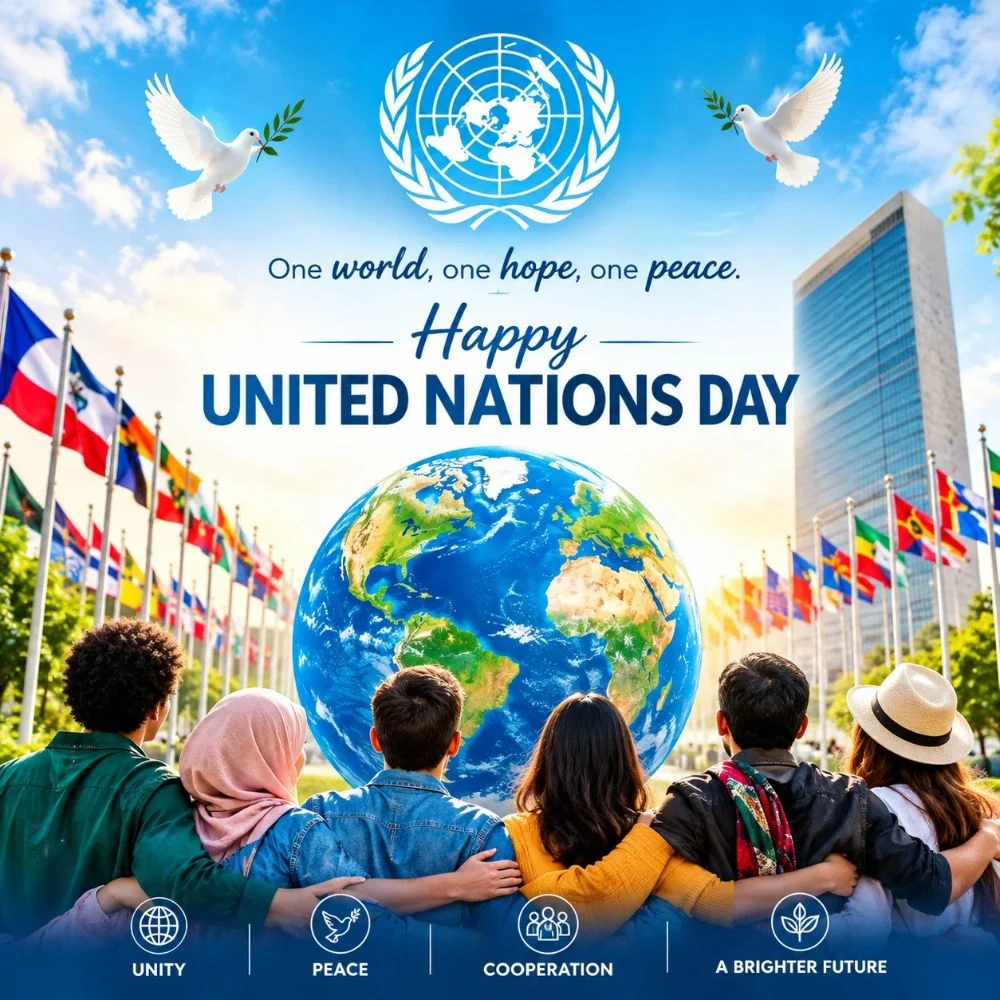
One world, one hope, one peace.
Meaning/Definition:
This United Nations Day message expresses the idea that every nation shares one planet, one shared dream of safety, and one common goal of lasting harmony.
Explanation:
The phrase focuses on unity, hope, and global peace. It is especially meaningful when people want to remind others that cooperation across borders can create a safer future for everyone.
Example:
- On this United Nations Day, let’s remember: one world, one hope, one peace.
- May we always work toward one world, one hope, one peace.
Best Use:
- A speech or social media post on United Nations Day.
- A classroom discussion about global unity.
Worst Use:
- Using it during an active conflict discussion where the situation feels too serious for a hopeful slogan.
Tone:
Hopeful, inclusive, inspiring
United for a brighter tomorrow.
Meaning/Definition:
This United Nations Day message means working together across nations so the future becomes better and more peaceful for everyone.
Explanation:
The phrase highlights joint effort and positive change. It is used when people want to motivate others to support peace, equality, and long-term progress.
Example:
- Happy United Nations Day! Let’s stay united for a brighter tomorrow.
- Together we can build a brighter tomorrow through cooperation and respect.
Best Use:
- Motivational messages or posters for UN Day events.
- Community or school celebrations focused on hope and teamwork.
Worst Use:
- Sending it right after bad news or a crisis, where brighter tomorrow may feel out of place.
Tone:
Optimistic, motivational, forward-looking
Different nations, one humanity.
Meaning/Definition:
This United Nations Day message reminds us that although countries are different, we all belong to one shared human family.
Explanation:
The phrase focuses on equality and common identity. It is used to encourage respect for diversity while stressing that every person deserves dignity and peace.
Example:
- On United Nations Day we celebrate different nations, one humanity.
- Our strength lies in different nations, one humanity.
Best Use:
- Cultural exchange events or diversity programs linked to United Nations Day.
- Messages that promote mutual respect between communities.
Worst Use:
- Using it in a way that ignores real cultural or political differences, making it sound unrealistic.
Tone:
Inclusive, respectful, unifying
Together, we are stronger.
Meaning/Definition:
This United Nations Day message means that countries and people achieve more when they support one another instead of working alone.
Explanation:
The phrase highlights teamwork and collective strength. It is often used to show that cooperation leads to better solutions for global challenges.
Example:
- On this United Nations Day, remember: together, we are stronger.
- Only together, we are stronger against poverty, conflict, and climate change.
Best Use:
- Team or group activities celebrating United Nations Day.
- Campaigns that call for joint action on shared problems.
Worst Use:
- Using it when individuals need personal recognition rather than group focus.
Tone:
Strong, collaborative, empowering
Peace begins with unity.
Meaning/Definition:
This United Nations Day message means that true peace can only start when people and nations choose to stand together.
Explanation:
The phrase connects unity directly to peace. It is used to show that lasting harmony depends on working side by side rather than against one another.
Example:
- Happy United Nations Day. Peace begins with unity.
- Let us never forget that peace begins with unity.
Best Use:
- Peace education programs or UN Day assemblies.
- Messages focused on conflict resolution and understanding.
Worst Use:
- Applying it in situations where unity is forced or ignores justice issues.
Tone:
Calm, thoughtful, purposeful
One planet, endless possibilities.
Meaning/Definition:
This United Nations Day message celebrates the idea that our shared Earth offers unlimited chances for growth, innovation, and progress when we work together.
Explanation:
The phrase focuses on optimism and opportunity. It encourages people to see the planet as a common home full of potential rather than limited resources.
Example:
- This United Nations Day reminds us: one planet, endless possibilities.
- With cooperation we truly have one planet, endless possibilities.
Best Use:
- Environmental or sustainability events linked to United Nations Day.
- Youth programs that inspire future-focused thinking.
Worst Use:
- Using it when discussing serious resource shortages without offering practical solutions.
Tone:
Optimistic, expansive, encouraging
Read More: 35+ Other Ways to Say “Happy World Post Day” with Examples 2026
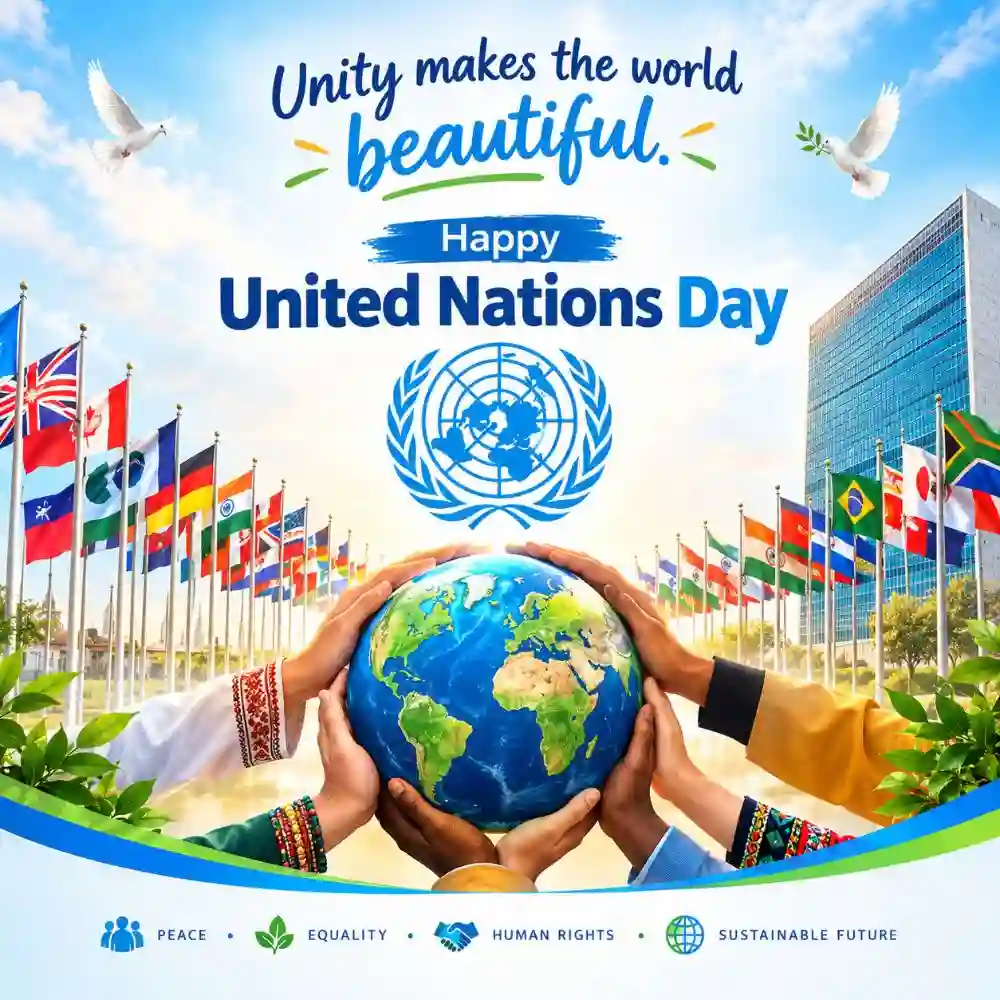
Unity makes the world beautiful.
Meaning/Definition:
This United Nations Day message means that when people and nations come together in respect and cooperation, the world becomes a better and more harmonious place.
Explanation:
The phrase highlights the positive result of unity. It is used to show that diversity combined with solidarity creates beauty and strength.
Example:
- On United Nations Day we see that unity makes the world beautiful.
- Different cultures working together prove that unity makes the world beautiful.
Best Use:
- Cultural festivals or art events celebrating United Nations Day.
- Messages that celebrate diversity and harmony.
Worst Use:
- Using it in a superficial way that overlooks real inequality or conflict.
Tone:
Warm, appreciative, uplifting
Many flags, one family.
Meaning/Definition:
This United Nations Day message means that although nations have their own identities and flags, all people belong to one human family.
Explanation:
The phrase balances national pride with global belonging. It is used to promote the idea that differences do not cancel our shared humanity.
Example:
- Happy United Nations Day — many flags, one family.
- Looking at the flags today we remember: many flags, one family.
Best Use:
- Flag ceremonies or international gatherings on United Nations Day.
- Messages that welcome people from different countries.
Worst Use:
- Using it when national identities feel threatened or when the audience is not ready for a family metaphor.
Tone:
Friendly, inclusive, family-like
Let peace cross every border.
Meaning/Definition:
This United Nations Day message is a call for peace to move freely beyond national boundaries and reach every corner of the world.
Explanation:
The phrase expresses a strong wish for borderless peace. It is used when people want to emphasize that peace should not stop at any country’s edge.
Example:
- This United Nations Day, let peace cross every border.
- Our shared hope is simple: let peace cross every border.
Best Use:
- Peace rallies or international friendship events.
- Messages focused on ending conflict and building bridges.
Worst Use:
- Using it in highly sensitive political contexts where borders are a core dispute.
Tone:
Earnest, hopeful, borderless
Together for a better world.
Meaning/Definition:
This United Nations Day message means joining hands across nations to create a fairer, safer, and more sustainable world for everyone.
Explanation:
The phrase focuses on collective action and improvement. It is used to invite people to contribute to positive global change through cooperation.
Example:
- Happy United Nations Day! Let’s stay together for a better world.
- Every small action counts when we work together for a better world.
Best Use:
- Closing messages in United Nations Day events or campaigns.
- Calls to action for community or school projects linked to global goals.
Worst Use:
- Using it without any concrete idea or invitation to act, making it feel empty.
Tone:
Positive, collective, purposeful
Read More: 35+ Other Ways to Say “Happy Teacher’s Day” (With Wishes & Examples)
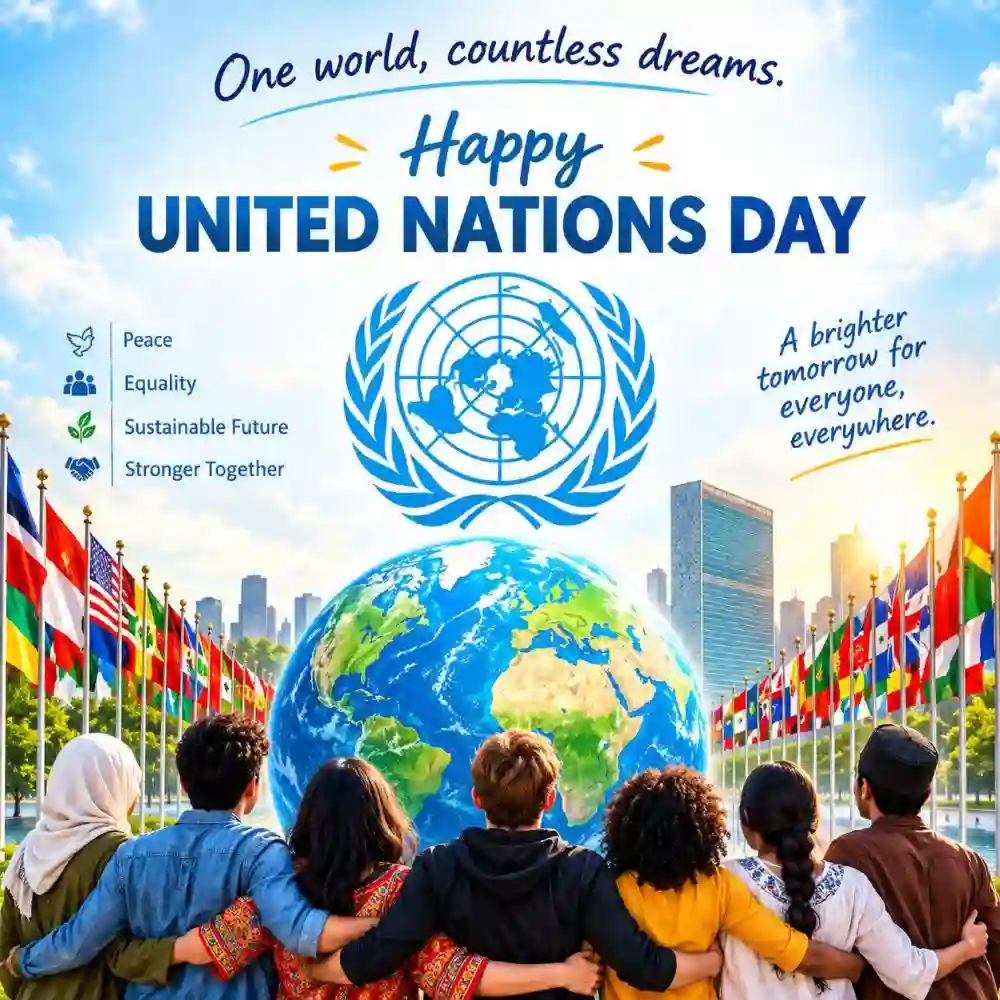
One world, countless dreams.
Meaning/Definition:
This United Nations Day message means that although we share one planet, every person and nation holds unique hopes and goals for the future.
Explanation:
The phrase celebrates both unity and individual aspiration. It is used to show that global cooperation can support many different dreams at the same time.
Example:
- On United Nations Day we remember: one world, countless dreams.
- Together we protect one world and nurture countless dreams.
Best Use:
- Youth events or classroom talks about global goals.
- Messages that inspire personal and collective ambition.
Worst Use:
- Using it when the focus should be on urgent shared problems rather than individual dreams.
Tone:
Hopeful, inclusive, visionary
Choose peace, spread love.
Meaning/Definition:
This United Nations Day message is a simple call to actively select peace and share kindness in everyday actions.
Explanation:
The phrase focuses on personal responsibility. It reminds people that peace and love grow when individuals make conscious choices to practice them.
Example:
- This United Nations Day, choose peace, spread love.
- In every conversation, choose peace, spread love.
Best Use:
- Short social media posts or greeting cards for UN Day.
- Messages aimed at children or community groups.
Worst Use:
- Using it in formal diplomatic or political statements where stronger language is expected.
Tone:
Gentle, positive, actionable
Unity is our greatest strength.
Meaning/Definition:
This United Nations Day message means that working together gives people and nations more power than working alone.
Explanation:
The phrase highlights the practical value of cooperation. It is used to encourage collective effort in solving big challenges.
Example:
- Happy United Nations Day — unity is our greatest strength.
- History shows us that unity is our greatest strength.
Best Use:
- Team-building or group activities on United Nations Day.
- Speeches about international partnerships.
Worst Use:
- Using it when individual rights or unique voices risk being overlooked.
Tone:
Confident, empowering, collective
Building bridges, not walls.
Meaning/Definition:
This United Nations Day message means creating connections and understanding between people instead of creating separation.
Explanation:
The phrase uses a clear image to promote openness and dialogue. It is often used when talking about reducing division and improving relationships across borders.
Example:
- On this United Nations Day, let’s keep building bridges, not walls.
- True progress comes from building bridges, not walls.
Best Use:
- Peace and dialogue programs linked to UN Day.
- Messages about cultural exchange and friendship.
Worst Use:
- Using it in highly sensitive border or security discussions without careful context.
Tone:
Open, constructive, hopeful
One humanity, shared hope.
Meaning/Definition:
This United Nations Day message means that all people belong to one human family and carry the same basic hope for a better life.
Explanation:
The phrase stresses common identity and common dreams. It is used to remind audiences that differences do not cancel our shared humanity.
Example:
- United Nations Day celebrates one humanity, shared hope.
- Across every border we remain one humanity, shared hope.
Best Use:
- Inclusive events or diversity celebrations on United Nations Day.
- Messages focused on equality and dignity.
Worst Use:
- Using it in a way that dismisses real cultural or historical differences.
Tone:
Warm, unifying, sincere
Small acts, global change.
Meaning/Definition:
This United Nations Day message means that everyday kind or responsible actions can contribute to larger positive results around the world.
Explanation:
The phrase encourages personal contribution. It shows that change does not always start with big decisions but often with consistent small efforts.
Example:
- This United Nations Day reminds us: small acts, global change.
- Never underestimate small acts that lead to global change.
Best Use:
- Community or school campaigns linked to UN Day.
- Messages that motivate individual action.
Worst Use:
- Using it when large-scale systemic solutions are clearly needed.
Tone:
Encouraging, practical, empowering
Read More: 35+ Other Ways to Say “After Careful Consideration” 2026
Together, peace is possible.
Meaning/Definition:
This United Nations Day message means that lasting peace can be achieved when people and nations choose to work side by side.
Explanation:
The phrase links cooperation directly to the possibility of peace. It is used to inspire confidence that peace is realistic when effort is shared.
Example:
- On United Nations Day we say: together, peace is possible.
- With dialogue and respect, together, peace is possible.
Best Use:
- Peace education or conflict-resolution events.
- Closing messages at United Nations Day gatherings.
Worst Use:
- Using it during active violence without acknowledging the difficulty of the situation.
Tone:
Hopeful, determined, collective
Celebrate unity, embrace diversity.
Meaning/Definition:
This United Nations Day message means valuing togetherness while fully accepting and respecting differences among people and cultures.
Explanation:
The phrase balances two important ideas. It encourages people to enjoy common ground without erasing unique identities.
Example:
- Happy United Nations Day! Celebrate unity, embrace diversity.
- The best way forward is to celebrate unity and embrace diversity.
Best Use:
- Multicultural festivals or school events on United Nations Day.
- Messages about inclusion and respect.
Worst Use:
- Using it when the audience feels their identity is being minimized.
Tone:
Balanced, respectful, joyful
Different cultures, one heart.
Meaning/Definition:
This United Nations Day message means that while cultures may look and sound different, people share the same core human feelings and values.
Explanation:
The phrase focuses on emotional connection across cultural lines. It is used to create warmth and understanding between diverse groups.
Example:
- On this United Nations Day we see different cultures, one heart.
- Music, food, and stories show us different cultures, one heart.
Best Use:
- Cultural exchange programs or friendship events.
- Messages that highlight shared human emotions.
Worst Use:
- Using it in a way that oversimplifies deep cultural or historical differences.
Tone:
Warm, heartfelt, connecting
Peace is everyone’s promise.
Meaning/Definition:
This United Nations Day message means that every person has a role and responsibility in creating and protecting peace.
Explanation:
The phrase turns peace into a shared commitment. It is used to remind people that peace is not only the job of leaders but of ordinary individuals too.
Example:
- This United Nations Day, remember that peace is everyone’s promise.
- From the classroom to the community, peace is everyone’s promise.
Best Use:
- Educational talks or youth programs about responsibility.
- Calls to personal action on UN Day.
Worst Use:
- Using it when people feel powerless or when systems, not individuals, hold the main power.
Tone:
Responsible, inclusive, motivating
Read More: 42+Ways to Say “My Mind is Made Up”(With Examples)2026
One world, one future.
Meaning/Definition:
This United Nations Day message means that all nations share the same planet and therefore share the same destiny.
Explanation:
The phrase stresses interconnectedness. It is used to show that decisions made in one place affect the future of everyone.
Example:
- United Nations Day reminds us: one world, one future.
- Climate, health, and peace prove we have one world, one future.
Best Use:
- Environmental or sustainability discussions linked to United Nations Day.
- Messages about long-term global planning.
Worst Use:
- Using it when short-term local needs are the main concern.
Tone:
Serious, forward-looking, unifying
Let kindness unite us all.
Meaning/Definition:
This United Nations Day message is a gentle invitation to use kindness as the force that brings people together.
Explanation:
The phrase places everyday kindness at the center of unity. It is used to encourage simple, human acts that build connection.
Example:
- This United Nations Day, let kindness unite us all.
- In every interaction, let kindness unite us all.
Best Use:
- Community kindness campaigns or school activities.
- Soft, positive messages for UN Day.
Worst Use:
- Using it in formal policy or conflict-resolution settings that require stronger language.
Tone:
Gentle, caring, inviting
Stronger nations, united people.
Meaning/Definition:
This United Nations Day message means that countries become stronger when their people stand together in purpose and values.
Explanation:
The phrase links national strength to internal and international unity. It is used to show that cooperation inside and between nations creates resilience.
Example:
- On United Nations Day we believe in stronger nations, united people.
- Progress comes from stronger nations and united people.
Best Use:
- National or civic events that also honor global cooperation.
- Messages about solidarity and shared responsibility.
Worst Use:
- Using it in a nationalistic way that ignores the needs of other countries.
Tone:
Strong, proud, cooperative
Hope has no borders.
Meaning/Definition:
This United Nations Day message means that hope can travel freely and belong to every person, regardless of nationality or location.
Explanation:
The phrase celebrates the borderless nature of hope. It is used to inspire people facing difficulty and to show that optimism is a universal right.
Example:
- Happy United Nations Day — hope has no borders.
- Even in hard times we remember that hope has no borders.
Best Use:
- Messages of encouragement during global challenges.
- Refugee or humanitarian support events linked to UN Day.
Worst Use:
- Using it when concrete help is needed more than hopeful words.
Tone:
Uplifting, borderless, compassionate
Read More: 45+Ways to Say “Go Big or Go Home”(With Examples)2026
United today, peaceful tomorrow.
Meaning/Definition:
This United Nations Day message means that the choices we make to stand together today will create a more peaceful future.
Explanation:
The phrase connects present action with future results. It is used to motivate immediate cooperation for long-term peace.
Example:
- This United Nations Day we choose: united today, peaceful tomorrow.
- Every step of unity brings us closer to a peaceful tomorrow.
Best Use:
- Closing statements at United Nations Day events.
- Campaigns that link today’s efforts to future peace.
Worst Use:
- Using it without any practical next step, making the promise feel empty.
Tone:
Forward-looking, determined, hopeful
Spread peace, inspire change.
Meaning/Definition:
This United Nations Day message means actively sharing peaceful actions and encouraging others to create positive differences.
Explanation:
The phrase focuses on influence and action. It is used when people want to motivate others to move from quiet support to visible, peaceful contribution.
Example:
- On this United Nations Day, spread peace, inspire change.
- Every kind word helps us spread peace and inspire change.
Best Use:
- Youth campaigns or social media posts for UN Day.
- Messages that encourage personal leadership in peace efforts.
Worst Use:
- Using it when the audience is already overwhelmed and needs practical support more than inspiration.
Tone:
Motivating, active, positive
Our world, our responsibility.
Meaning/Definition:
This United Nations Day message means that caring for the planet and its people is a shared duty for every nation and individual.
Explanation:
The phrase stresses ownership and accountability. It is used to remind people that global problems belong to all of us, not just leaders or distant organizations.
Example:
- Happy United Nations Day — our world, our responsibility.
- Climate, peace, and equality show us it is our world, our responsibility.
Best Use:
- Environmental or civic education events linked to United Nations Day.
- Calls to personal and community action.
Worst Use:
- Using it to blame individuals for large systemic failures without offering support.
Tone:
Responsible, serious, collective
Together, we make a difference.
Meaning/Definition:
This United Nations Day message means that real impact happens when people and nations join forces instead of acting alone.
Explanation:
The phrase highlights the power of collective effort. It is used to build confidence that combined actions create meaningful results.
Example:
- On United Nations Day we know: together, we make a difference.
- Small groups and big nations prove that together, we make a difference.
Best Use:
- Team or community projects celebrating UN Day.
- Closing messages that invite continued cooperation.
Worst Use:
- Using it when individual recognition or unique contributions need to be highlighted.
Tone:
Encouraging, collaborative, confident
Unity starts with understanding.
Meaning/Definition:
This United Nations Day message means that true togetherness begins when people first listen to and respect one another’s views.
Explanation:
The phrase places empathy and listening at the foundation of unity. It is used to show that cooperation cannot grow without mutual understanding.
Example:
- This United Nations Day reminds us that unity starts with understanding.
- Before we act together, remember that unity starts with understanding.
Best Use:
- Dialogue workshops or cultural exchange programs on United Nations Day.
- Messages focused on reducing prejudice and building trust.
Worst Use:
- Using it when urgent action is needed and lengthy discussion would delay help.
Tone:
Thoughtful, patient, respectful
One planet, one shared future.
Meaning/Definition:
This United Nations Day message means that all people live on the same Earth and therefore share the same long-term destiny.
Explanation:
The phrase stresses deep interconnection. It is used to show that decisions about the environment, peace, or development affect everyone.
Example:
- United Nations Day teaches us: one planet, one shared future.
- Protecting nature proves we have one planet, one shared future.
Best Use:
- Sustainability talks or climate-focused UN Day events.
- Messages about long-term global planning.
Worst Use:
- Using it when immediate local needs require focused short-term solutions.
Tone:
Serious, forward-looking, unifying
Read More: 49+Ways to Say “Don’t Make A Fuss”(With Examples)2026
Let humanity lead the way.
Meaning/Definition:
This United Nations Day message means allowing compassion, dignity, and human values to guide decisions instead of power or profit alone.
Explanation:
The phrase prioritizes human-centered choices. It is used when people want to place kindness and fairness at the center of global action.
Example:
- On this United Nations Day, let humanity lead the way.
- In every policy and project, let humanity lead the way.
Best Use:
- Humanitarian or human-rights focused events.
- Messages that call for ethical leadership.
Worst Use:
- Using it in highly technical or economic discussions without clear human context.
Tone:
Compassionate, principled, guiding
Peace connects every heart.
Meaning/Definition:
This United Nations Day message means that peace has the power to link people emotionally across cultures, distances, and differences.
Explanation:
The phrase focuses on the emotional and human side of peace. It is used to show that peace is not only political but also deeply personal.
Example:
- Happy United Nations Day — peace connects every heart.
- Music, stories, and kindness prove that peace connects every heart.
Best Use:
- Cultural or arts events celebrating United Nations Day.
- Soft, emotional messages about global friendship.
Worst Use:
- Using it during hard political negotiations where practical agreements are needed.
Tone:
Warm, emotional, connecting
Stand together, shine together.
Meaning/Definition:
This United Nations Day message means that people and nations achieve greater success and visibility when they support one another.
Explanation:
The phrase links solidarity with positive outcomes. It is used to encourage mutual support so that everyone can succeed.
Example:
- On United Nations Day we choose to stand together, shine together.
- When communities stand together, they shine together.
Best Use:
- Team or group celebrations on UN Day.
- Messages that promote mutual encouragement.
Worst Use:
- Using it when competition or individual excellence is the main focus.
Tone:
Uplifting, supportive, bright
Different voices, one vision.
Meaning/Definition:
This United Nations Day message means that many unique perspectives can still work toward the same shared goal of peace and progress.
Explanation:
The phrase values diversity of opinion while keeping a common direction. It is used to show that disagreement does not prevent joint purpose.
Example:
- This United Nations Day celebrates different voices, one vision.
- In the UN spirit we welcome different voices, one vision.
Best Use:
- Inclusive forums or multi-stakeholder events.
- Messages about democratic or collaborative decision-making.
Worst Use:
- Using it when a single clear decision is required and too many voices create confusion.
Tone:
Inclusive, balanced, purposeful
Make unity your strength.
Meaning/Definition:
This United Nations Day message means turning togetherness into a practical source of power and resilience.
Explanation:
The phrase encourages people to treat unity as an active advantage. It is used to motivate groups to rely on cooperation as their main resource.
Example:
- On this United Nations Day, make unity your strength.
- In challenges big and small, make unity your strength.
Best Use:
- Motivational talks or team challenges linked to UN Day.
- Messages that build group confidence.
Worst Use:
- Using it when personal boundaries or individual needs are being ignored.
Tone:
Strong, practical, empowering
Peace is our common language.
Meaning/Definition:
This United Nations Day message means that peace is a shared value that can be understood and spoken by every culture and nation.
Explanation:
The phrase presents peace as a universal form of communication. It is used to show that even when words differ, the desire for peace can connect people.
Example:
- Happy United Nations Day — peace is our common language.
- Across every border, peace is our common language.
Best Use:
- International friendship or language-exchange events.
- Messages that highlight shared human values.
Worst Use:
- Using it when concrete translation or mediation is still needed between conflicting sides.
Tone:
Universal, calm, connecting
Together, we can change the world.
Meaning/Definition:
This United Nations Day message means that collective action has the power to transform global conditions for the better.
Explanation:
The phrase is bold and action-oriented. It is used to inspire large-scale hope and commitment to joint effort.
Example:
- On United Nations Day we believe: together, we can change the world.
- History shows that together, we can change the world.
Best Use:
- Campaign launches or large UN Day gatherings.
- Messages that call for ambitious shared goals.
Worst Use:
- Using it without any realistic first steps, making the claim feel empty.
Tone:
Bold, hopeful, collective
Respect differences, celebrate unity.
Meaning/Definition:
This United Nations Day message means honoring what makes people unique while still rejoicing in what brings them together.
Explanation:
The phrase keeps a healthy balance between diversity and togetherness. It is used to promote inclusion without forcing sameness.
Example:
- This United Nations Day we respect differences and celebrate unity.
- True strength comes when we respect differences and celebrate unity.
Best Use:
- Multicultural festivals or school diversity programs.
- Messages about inclusive communities.
Worst Use:
- Using it when real inequalities need direct attention rather than celebration.
Tone:
Balanced, respectful, joyful
One world deserves peace.
Meaning/Definition:
This United Nations Day message means that our shared planet and all its people have a basic right to live without conflict and fear.
Explanation:
The phrase states a clear moral claim. It is used to affirm that peace is not a luxury but a rightful condition for everyone.
Example:
- On this United Nations Day we say: one world deserves peace.
- For every child and every nation, one world deserves peace.
Best Use:
- Peace rallies or advocacy messages on UN Day.
- Statements that defend the right to safety and security.
Worst Use:
- Using it in a passive way without any call to protect or build that peace.
Tone:
Firm, moral, affirming
United hearts, limitless hope.
Meaning/Definition:
This United Nations Day message means that when people connect emotionally, the amount of hope available becomes endless.
Explanation:
The phrase links emotional unity with expanded possibility. It is used to show that closeness between people multiplies optimism.
Example:
- Happy United Nations Day — united hearts, limitless hope.
- When communities join, we create united hearts and limitless hope.
Best Use:
- Emotional or inspirational messages for UN Day.
- Events that focus on friendship and solidarity.
Worst Use:
- Using it in highly practical or technical discussions that need concrete plans.
Tone:
Emotional, expansive, hopeful
Let every nation shine.
Meaning/Definition:
This United Nations Day message means giving every country the chance to succeed, contribute, and be recognized.
Explanation:
The phrase promotes equal opportunity among nations. It is used to encourage support for the progress and dignity of all countries.
Example:
- On United Nations Day we hope: let every nation shine.
- Through fair cooperation, let every nation shine.
Best Use:
- International partnership or development-focused events.
- Messages about equal respect among countries.
Worst Use:
- Using it in a competitive way that turns shine into rivalry.
Tone:
Encouraging, equal, bright
Kindness knows no borders.
Meaning/Definition:
This United Nations Day message means that acts of kindness can travel freely and reach people beyond any national boundary.
Explanation:
The phrase celebrates the borderless nature of compassion. It is used to inspire help and care that ignore geographic limits.
Example:
- This United Nations Day reminds us that kindness knows no borders.
- In every crisis we see that kindness knows no borders.
Best Use:
- Humanitarian or charity campaigns linked to UN Day.
- Messages that encourage cross-border help and friendship.
Worst Use:
- Using it when local needs are urgent and attention should stay close to home first.
Tone:
Compassionate, open, borderless
Global unity, endless hope.
Meaning/Definition:
This United Nations Day message means that when the world stands together, the supply of hope becomes unlimited.
Explanation:
The phrase connects worldwide cooperation with lasting optimism. It is used to show that unity expands what people believe is possible.
Example:
- Happy United Nations Day — global unity, endless hope.
- When nations cooperate we gain global unity and endless hope.
Best Use:
- Large-scale or inspirational UN Day messages.
- Campaigns that link cooperation to future possibility.
Worst Use:
- Using it when hope alone is not enough and concrete resources are required.
Tone:
Expansive, optimistic, unifying
Together for peace and progress.
Meaning/Definition:
This United Nations Day message means joining efforts to achieve both lasting peace and steady improvement in people’s lives.
Explanation:
The phrase combines two core goals of the United Nations. It is used to show that peace and development support each other.
Example:
- On this United Nations Day we stand together for peace and progress.
- Every project that helps people moves us together for peace and progress.
Best Use:
- Development or peacebuilding events linked to UN Day.
- Messages that connect safety with better living conditions.
Worst Use:
- Using it when only one of the two goals (peace or progress) is relevant to the moment.
Tone:
Balanced, purposeful, collective
A united world is a better world.
Meaning/Definition:
This United Nations Day message means that when nations and people work as one, the quality of life improves for everyone.
Explanation:
The phrase states a clear cause-and-effect idea. It is used to argue that unity itself produces better outcomes in safety, fairness, and opportunity.
Example:
- United Nations Day shows us that a united world is a better world.
- History and hope both prove that a united world is a better world.
Best Use:
- Closing statements or summary messages for UN Day.
- Broad appeals for continued international cooperation.
Worst Use:
- Using it without examples, making the claim feel too general.
Tone:
Clear, affirmative, hopeful
What would the world look like if we all chose peace over conflict?
- This United Nations Day question invites us to picture a calmer, safer planet where dialogue replaces fighting.
- It helps people reflect on the real benefits of peace — fewer lives lost, stronger communities, and more energy for progress.
- Best shared in classrooms, youth talks, or social media posts that encourage hopeful thinking.
- Avoid using it during active crises when people need practical help more than imagination.
- Tone: Reflective, hopeful, thought-provoking.
Can one small act of kindness change the world?
- This United Nations Day question asks whether everyday kindness can create larger positive effects across communities and borders.
- It reminds us that big change often begins with simple, consistent actions like helping a neighbor or speaking up for fairness.
- Ideal for school activities, kindness campaigns, or short messages that inspire personal responsibility.
- Avoid using it when large systemic problems need urgent structural solutions rather than individual acts alone.
- Tone: Encouraging, practical, optimistic.
What does unity mean to you? 🌍
- This United Nations Day question opens space for personal reflection on togetherness, respect, and shared purpose.
- It invites people to define unity in their own words — whether as cooperation, friendship, or standing up for one another.
- Works well in group discussions, classroom circles, or interactive social media posts.
- Avoid using it in formal settings where clear definitions or action plans are expected instead of open opinions.
- Tone: Open, inclusive, conversational.
If you could change one thing to make the world better, what would it be?
- This United Nations Day question encourages people to identify one meaningful improvement they care about most.
- It helps turn big global hopes into focused personal priorities such as education, climate action, or fairness.
- Perfect for workshops, student essays, or community conversations that lead to concrete ideas.
- Avoid using it when the audience feels powerless or when the question may overwhelm rather than inspire.
- Tone: Thoughtful, empowering, forward-looking.
How can we make our world more peaceful, one step at a time?
- This United Nations Day question focuses on practical, gradual actions that build peace in daily life and communities.
- It shifts attention from distant goals to realistic steps such as listening better, reducing conflict, or supporting local harmony.
- Best used in peace education sessions, family talks, or step-by-step campaign messages.
- Avoid using it when immediate large-scale intervention is clearly needed and small steps alone are not enough.
- Tone: Practical, hopeful, actionable.
FAQs About Other Ways to Say United Nations Day
1. What are other ways to say United Nations Day?
Other ways to say United Nations Day include UN Day, World Unity Day, Global Peace Day, International Cooperation Day, and United Nations Celebration Day.
2. What is another name for United Nations Day?
A common alternative name is UN Day, which is a short and widely recognized way to refer to United Nations Day.
3. How can I say Happy United Nations Day differently?
You can say “Celebrating Global Unity,” “Together for a Better World,” “Happy Day of International Cooperation,” or “United for Peace and Progress.”
4. What are some short United Nations Day phrases?
Short phrases include “One World, One Future,” “United for Peace,” “Together We Thrive,” “Global Unity Matters,” and “Peace Without Borders.”
5. What are some inspirational United Nations Day quotes?
Inspirational phrases include “Unity makes our world stronger,” “Peace begins with understanding,” and “Together, we can build a brighter future.”
6. How can students celebrate United Nations Day with slogans?
Students can use slogans such as “Different Nations, One Humanity,” “Stand Together for Peace,” “Our World, Our Responsibility,” and “Unity Starts with Us.”
7. What are some creative United Nations Day captions?
Creative captions include “One planet, countless cultures, one shared future,” “Celebrating the power of coming together,” and “Many nations, one dream of peace.”
8. What is a good slogan for United Nations Day?
A good slogan is “Many Nations, One World, One Hope.” It highlights unity, cooperation, and the shared hope for a peaceful future.
9. Why do people use alternative phrases for United Nations Day?
People use alternative phrases to make social media captions, school posters, speeches, and event messages more creative, memorable, and meaningful.
10. When is United Nations Day celebrated?
United Nations Day is celebrated every year on October 24 to mark the anniversary of the UN Charter entering into force in 1945.
Conclusion
Other ways to say United Nations Day can help you express the message of global unity, peace, and international cooperation in fresh and meaningful words. Phrases such as “United for Peace,” “One World, One Future,” and “Together for a Better World” work well for captions, posters, speeches, and school celebrations.
Choosing the right phrase depends on your purpose. For a social media post, use a short and memorable caption. For a school event or speech, choose a meaningful slogan that highlights teamwork, respect, and understanding among nations.
Ultimately, United Nations Day reminds us that people from different countries and cultures can work together for a better future. Share a thoughtful message on October 24 to celebrate peace, diversity, and the power of global unity.

I’m Jane Austen, the admin of GrammarGuide.com, where words come to life in smarter, sharper, and more creative ways. I focus on simplifying grammar, exploring powerful synonyms, and sharing fun, engaging expressions that make everyday communication more effective. My goal is to help readers write with clarity, confidence, and a touch of personality, whether it’s for professional use or just for fun.